WorldParticle uses one AI architecture to simulate very different materials
MIT and UBC researchers have developed a shared AI architecture for simulating cloth, sand, fluids and molecular motion. The approach is promising, but it is not one fully trained model that handles all physics.
·4 min read
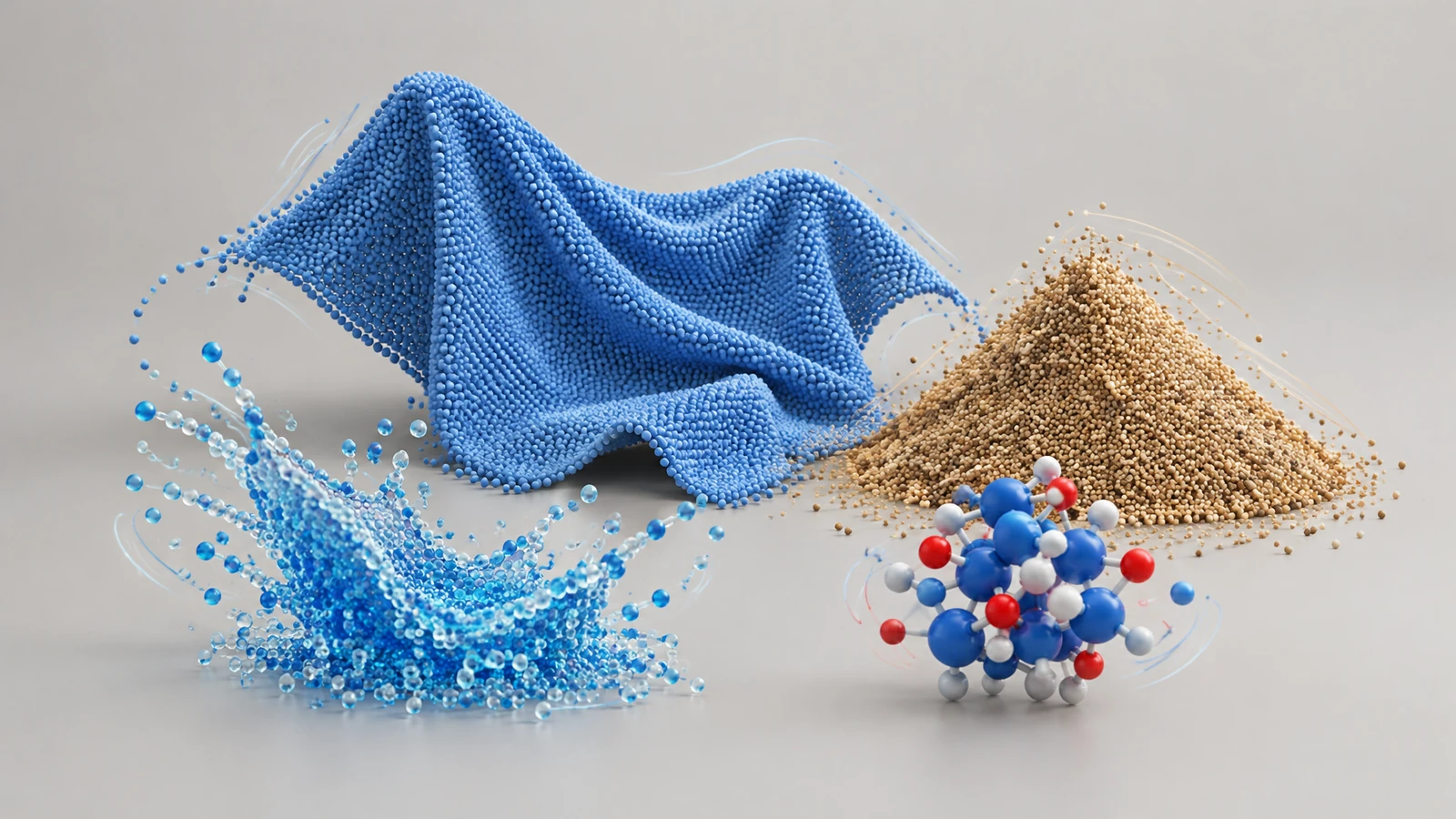
Concept illustration of particle-based simulation, not an image or measurement from the WorldParticle research.Illustration generated with OpenAI for Progress Radar
Simulating water, sand, elastic materials and molecules usually calls for different computational methods. Researchers at the Massachusetts Institute of Technology (MIT), the University of British Columbia (UBC) and partner institutions have developed WorldParticle, an AI-based architecture designed to work across these distinct physical systems.
MIT highlighted the research on November 9, 2026. The underlying paper first appeared as a preprint in May and is due to be presented at SIGGRAPH Asia 2026. This is a new presentation of existing research, not a system developed within the past day.
Particles as a common language
WorldParticle represents materials as particles with positions, velocities and other properties. Rather than engineering an entirely different specialized solver for every type of matter, the researchers apply the same transformer architecture and computational recipe to six categories: cloth, elastic solids, Newtonian and non-Newtonian fluids, granular materials such as sand, and molecular dynamics.
One distinction matters: a single architecture does not mean one trained model with a universal set of weights for all physical phenomena. The researchers train the model separately for the different categories. What is shared is the way simulations are constructed and executed, while the system learns different material behaviors.
Combining known forces with learned interactions
At each simulation step, an explicit predictor first accounts for known external forces. A learned correction component then estimates how particles interact and adjusts their positions and velocities. The transformer gathers local information and uses a hierarchical representation to reduce the computational cost of processing large particle sets.
The researchers demonstrate the system with examples including deforming cloth, flowing liquids and collapsing sand. They also report tests involving material properties, geometries, initial states and applied forces not seen during training. The project's demonstration page describes stable sequences of up to 800 steps in one fluid experiment. These are results from the evaluated setups, not a guarantee of stability in arbitrary simulations.
Potential uses and remaining limits
A shared architecture could eventually make it easier to investigate coupled systems, such as a soft robot interacting with sand or liquid. The researchers also show examples of interactive control, inverse design and learning from observations of real physical objects.
WorldParticle does not yet replace established physics solvers in every setting. Accuracy and computational demands depend on the task, and the study does not show that one network can simulate every physical process without further training. Potential applications in drug development, materials discovery and advanced robotics remain possibilities that require more validation.
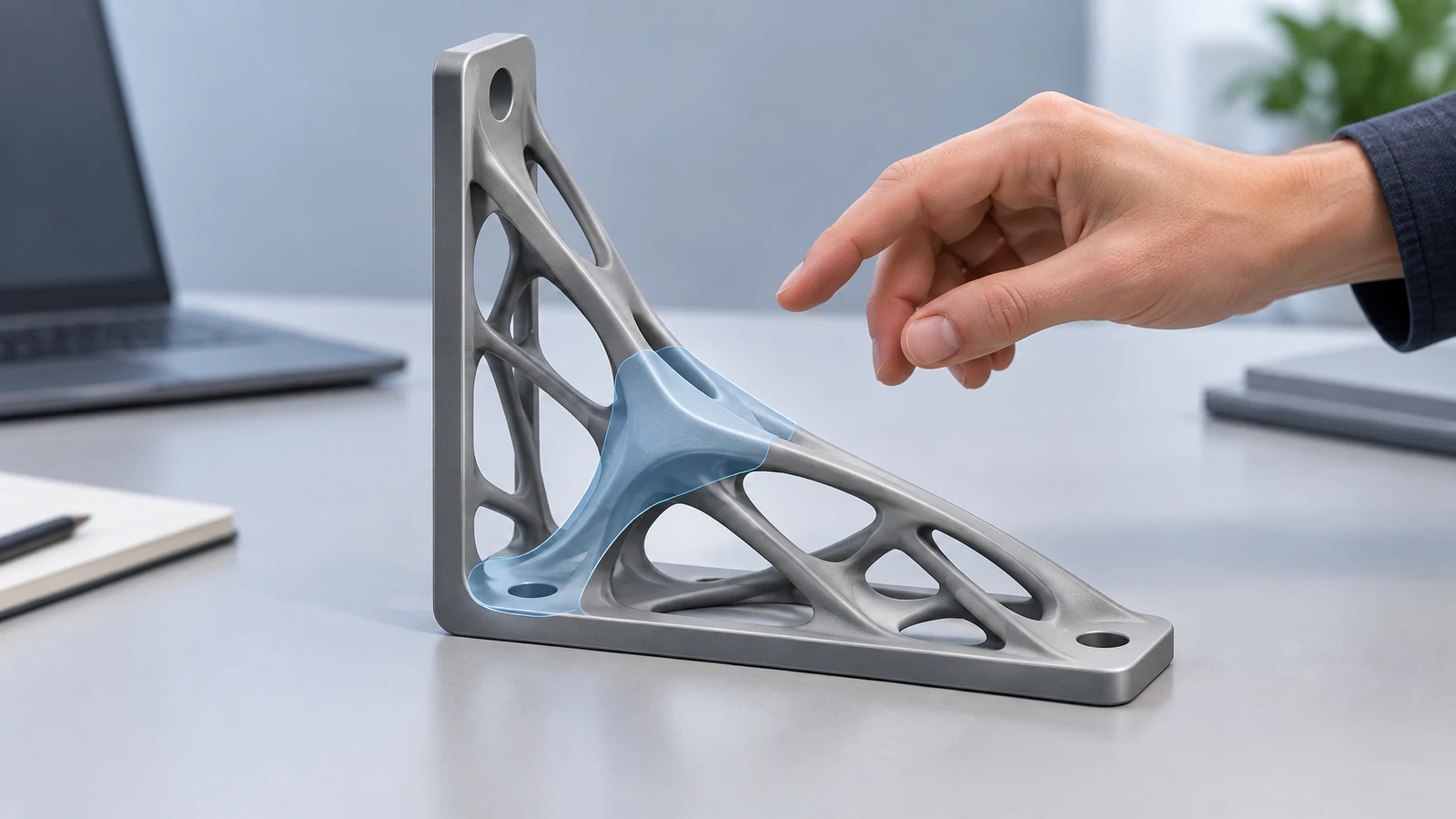
MIT researchers developed an AI assistant that recommends regions to modify during algorithmic structural design. One demonstration increased calculated linear buckling load by 39%, but the approach has not yet been validated in a broad study with human designers.
Google DeepMind used AI agents and Lean to check core security properties down to machine code. The proofs cover defined parts of the Signal protocol, not the entire app.
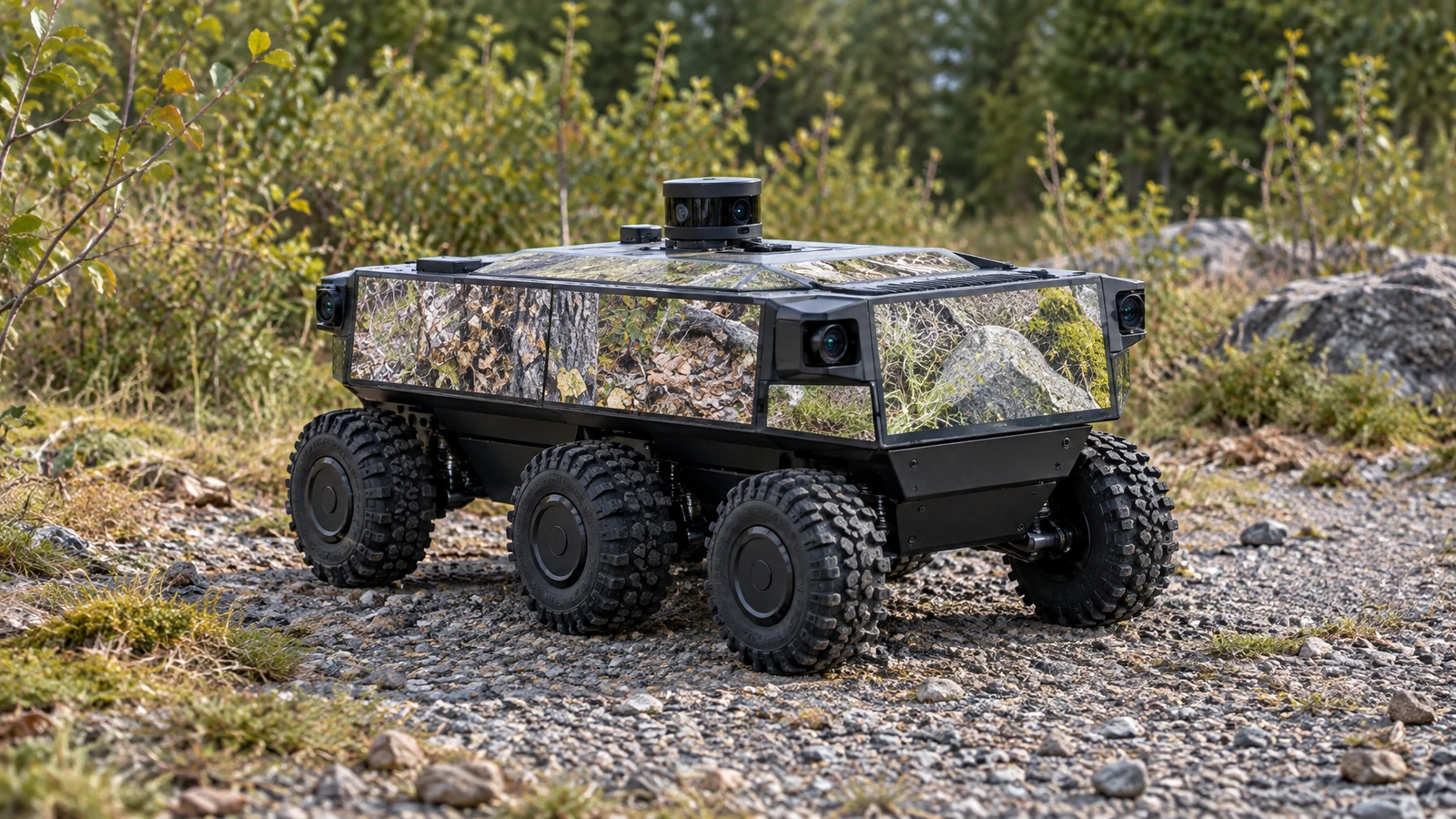
CephCam combines cameras, adaptive texture generation and OLED displays to match its surroundings. In controlled tests, a model vehicle became harder to detect for both human observers and several AI-based object detectors.