Measurements in an electron-doped copper oxide directly link superconductivity to antiferromagnetic spin fluctuations. The result resolves an important part of the puzzle, but not the mechanism behind the highest transition temperatures.
Quantinuum reports 99.9995% logical memory fidelity on its Helios system. The result shows strong error suppression with a color code, while scaling to useful fault-tolerant computation remains unproven.
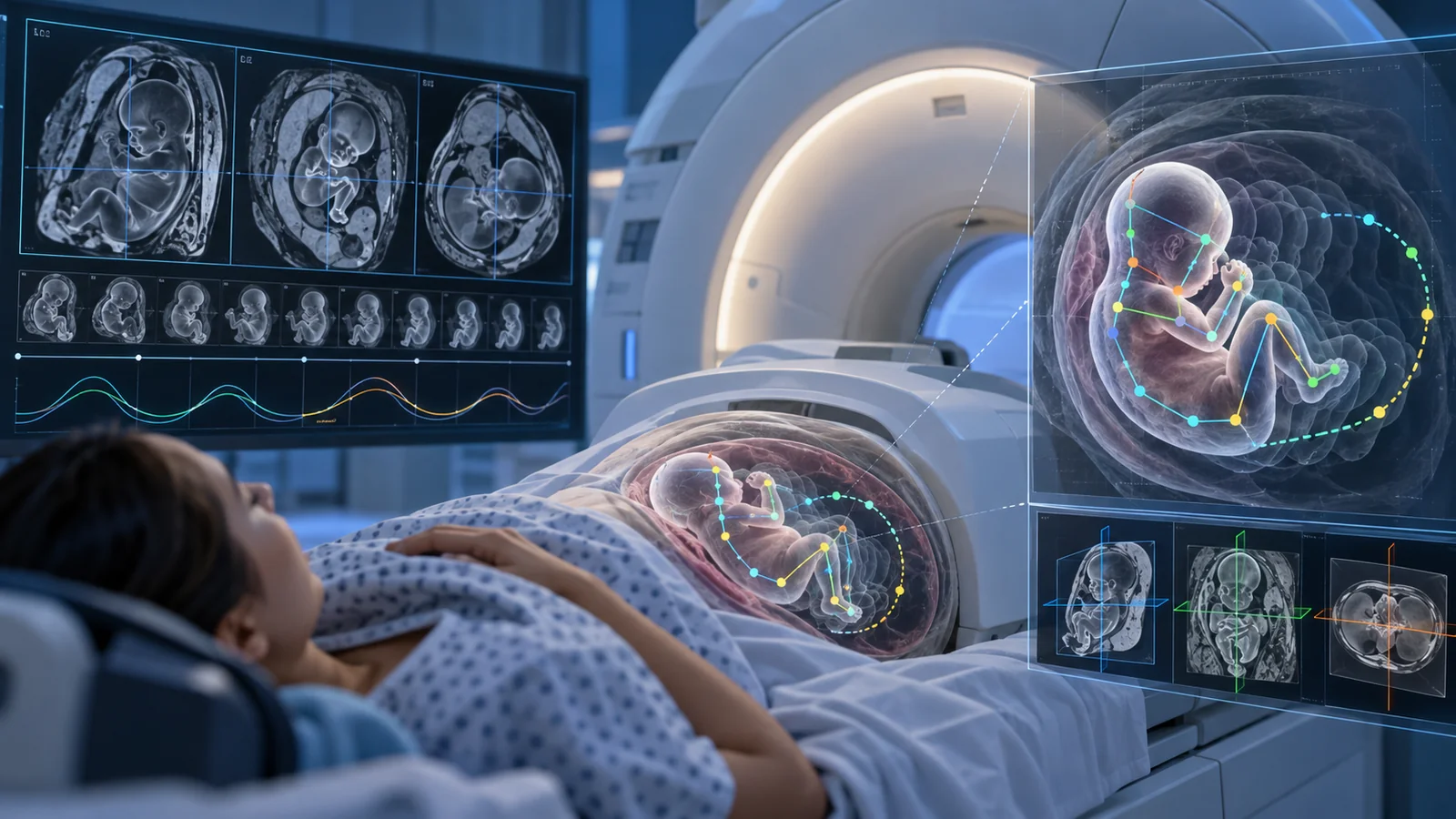
E(3)-Pose learns the physical symmetries of the fetal brain and estimates head position from rapid 3D MRI. The goal is to let future scanners adjust diagnostic images as the fetus moves.
Researchers have developed an artificial skin with more than 10,000 touch sensors that organizes signals more like the human nervous system. In experiments, it let robots detect very fine surface structures and react automatically to potentially harmful contact.
Google has demonstrated a new way to produce a critical resource for error-corrected quantum computers. On its Willow processor, the method reduced errors by about 40 times and achieved a reported fidelity of 99.99 percent.
Humanoid robots need enormous amounts of experience before they can work reliably in the real world. DexForce wants to move much more of that training into simulation.