New microscopy reconstructs 3D images through scattering tissue
Volumetric scattering microscopy uses information encoded in scattered fluorescence to reconstruct three-dimensional structures without mechanical scanning or wavefront measurement.
Search will be available as the English edition grows.
Researchers have made tiny polymer vesicles move away from a chemical source through changes in their membranes. The laboratory result reveals a simple mechanism for cell-like motion, not a working artificial cell.
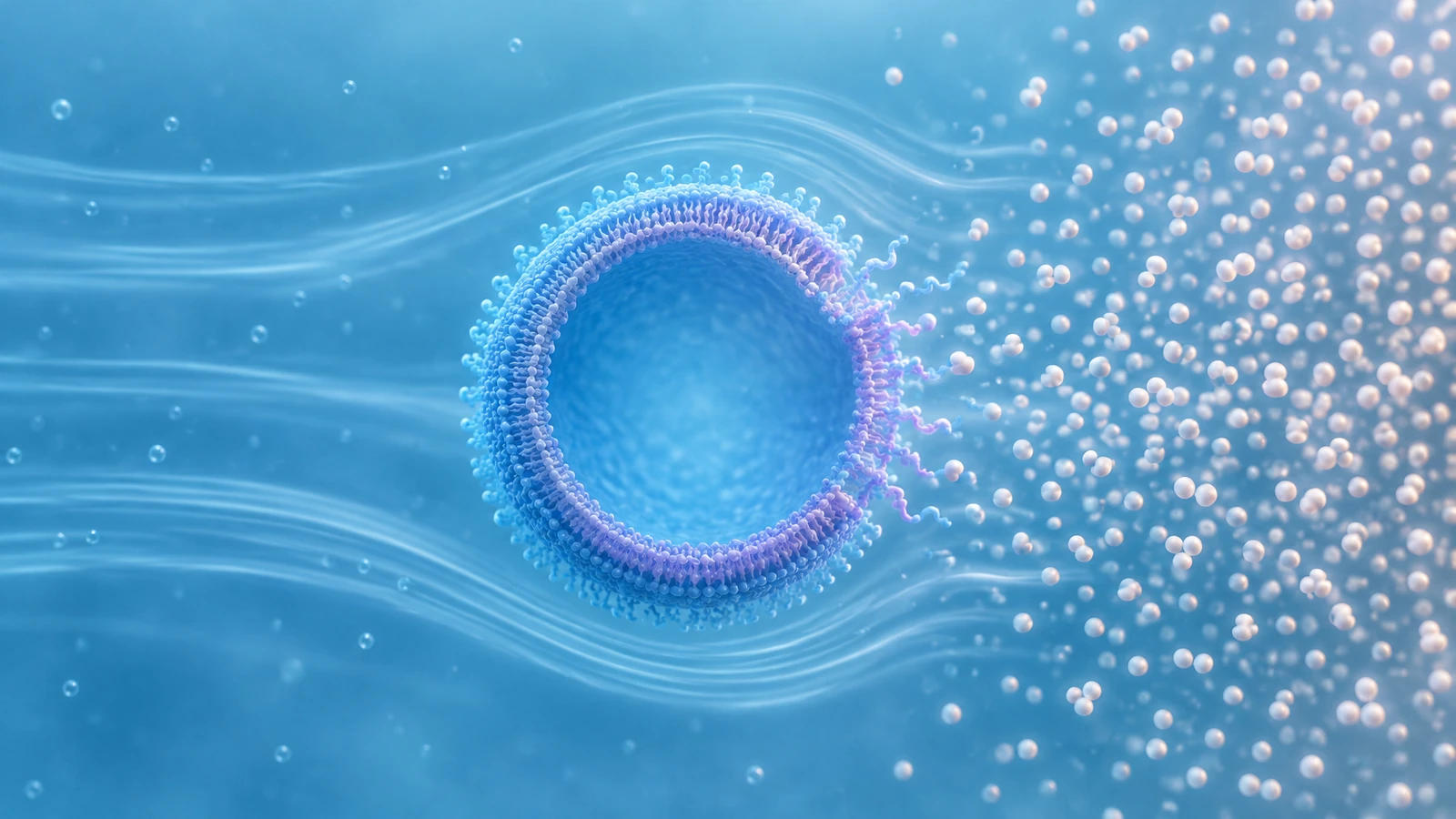
An artificial particle does not necessarily need a motor, enzymes or an elaborate signalling system to move directionally in a chemical environment. Researchers at Radboud University in the Netherlands and Durham University in the UK have demonstrated tiny hollow polymer vesicles moving away from regions with higher concentrations of lactic acid. Their study was published in Nature Chemistry on 11 November 2026.
The behaviour is called negative chemotaxis: movement away from a chemical cue. It does not make the particles alive. Instead, the study shows that a comparatively simple membrane can translate a chemical stimulus into physical motion without the intricate cellular machinery used by living organisms.
The artificial vesicles, known as polymersomes, consist of block copolymers containing polyethylene glycol (PEG) and polylactic acid (PLA). They self-assemble into hollow structures enclosed by membranes. The researchers measured an average hydrodynamic diameter of 346 nanometres, with an uncertainty of 10 nanometres.
When lactic acid encounters the membrane, it interacts with the PLA portions of the polymer chains. Those segments change their conformation and become more exposed to the surrounding water. If the acid concentration is greater on one side, the membrane responds asymmetrically.
In the researchers' mechanistic model, that asymmetry creates a gradient in interfacial tension. A local flow develops along the particle surface, and the vesicle moves in the opposite direction, away from the acid. A chemical concentration difference is still needed: moving 'without a motor' does not mean moving without an energy source.
The team tested the effect in a liquid-filled glass device and in microfluidic channels, where the chemical gradient could be controlled. In the microchannels, the vesicles showed a displacement away from the acid of 4.6 ± 1.2 micrometres over 32.8 seconds of interaction. This was the mean result across four independent microfluidic devices, not the swimming speed of an individual particle.
Control experiments helped distinguish the proposed mechanism from ordinary diffusion and bulk liquid flow. Vesicles with a more rigid polystyrene-based membrane did not show the same response. The researchers also found that electrically mediated diffusiophoresis could make a partial contribution but did not by itself account for the PLA vesicles' movement. Experiments and simulations therefore support a central role for molecular changes in the membrane.
The striking feature is how few components are needed to produce a directional response. The membrane acts both as the chemical receiver and as the part that converts the signal into movement. The team also observed negative chemotaxis with certain other weak acids that interact with PLA, whereas a control compound lacking the relevant interaction did not produce the effect.
In the longer term, this principle could inform artificial cells and particles that navigate using chemical cues, potentially including drug-delivery systems. But the study did not test the vesicles in living tissue, animals or humans. It does not demonstrate targeted delivery of medicines or reliable navigation inside the body. For now, the advance is an experimentally supported physical mechanism for simple, cell-like motion.
KEEP EXPLORING
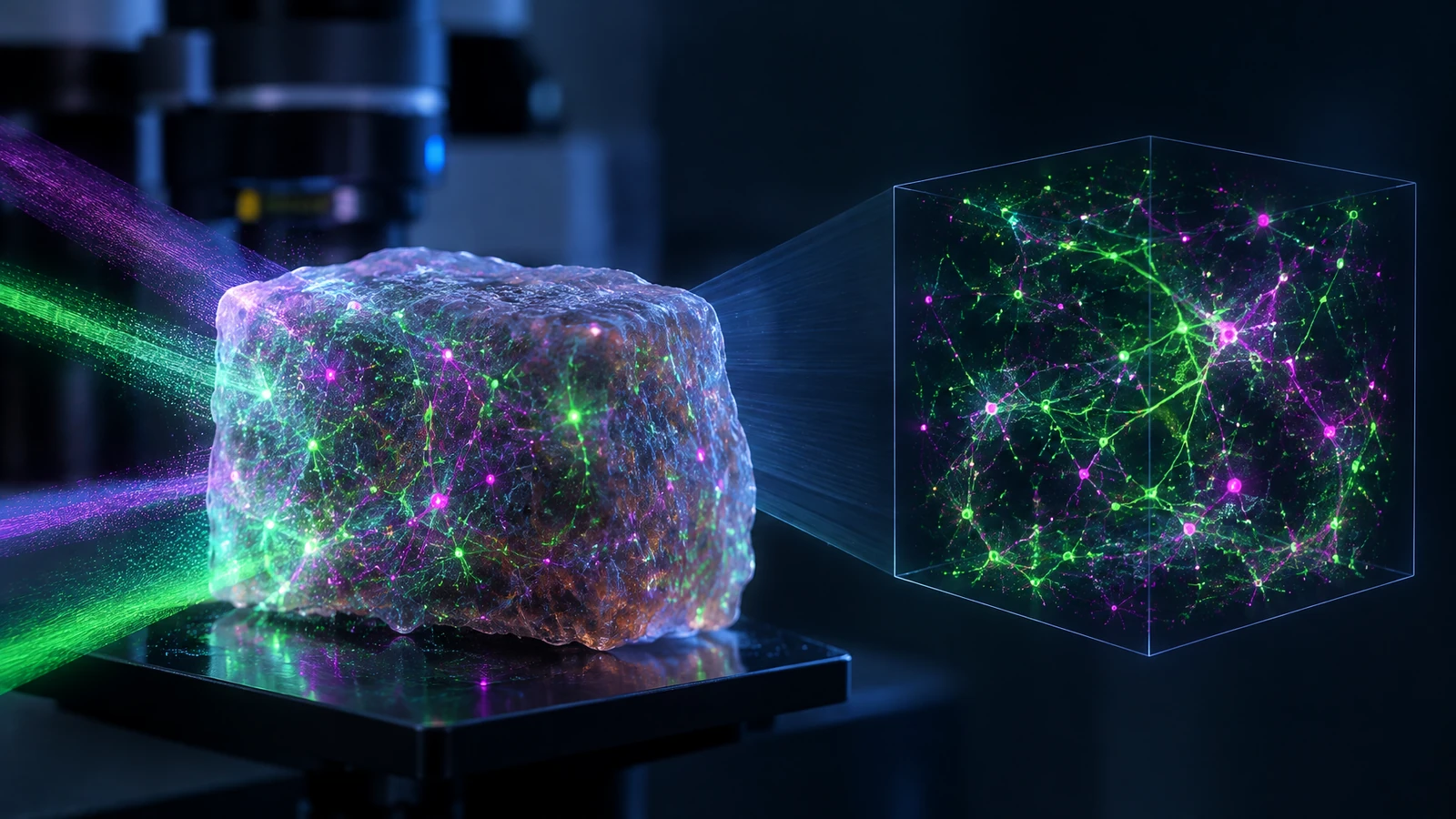
Volumetric scattering microscopy uses information encoded in scattered fluorescence to reconstruct three-dimensional structures without mechanical scanning or wavefront measurement.

Pinal translates descriptions of desired biological functions into new protein candidates. In laboratory tests, model designs showed function across four different tasks, including two active enzymes.
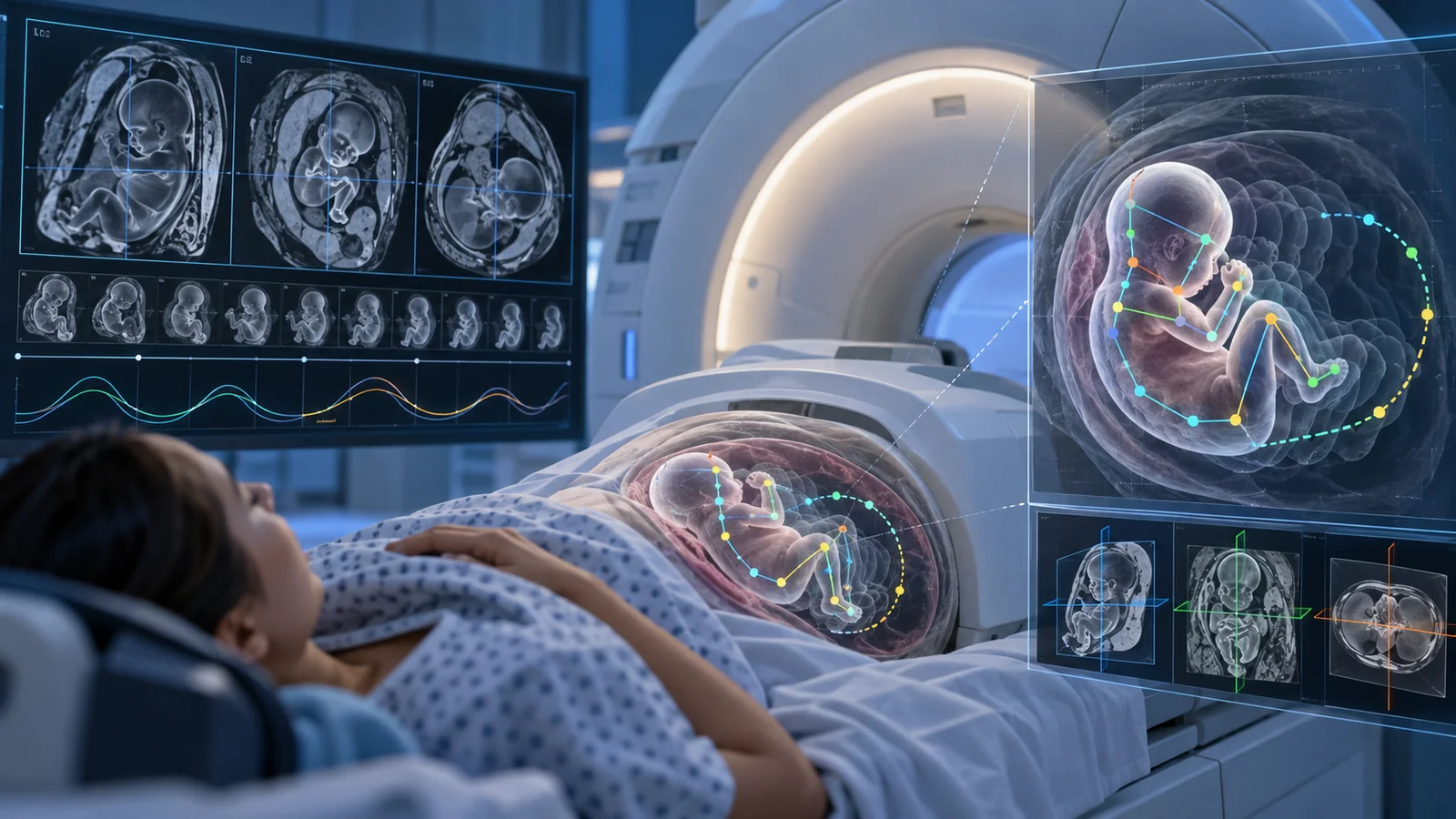
E(3)-Pose learns the physical symmetries of the fetal brain and estimates head position from rapid 3D MRI. The goal is to let future scanners adjust diagnostic images as the fetus moves.