AI tracks fetal motion to make MRI scans more reliable
E(3)-Pose learns the physical symmetries of the fetal brain and estimates head position from rapid 3D MRI. The goal is to let future scanners adjust diagnostic images as the fetus moves.
Search will be available as the English edition grows.
Pinal translates descriptions of desired biological functions into new protein candidates. In laboratory tests, model designs showed function across four different tasks, including two active enzymes.
Designing a new protein usually requires more than describing what you want it to do. The goal often has to be translated into details about geometry, binding sites, structure or amino-acid sequence before a computational tool can begin searching for candidates.
The researchers behind Pinal are trying to move that interface up a level. The model accepts a natural-language description of a desired biological function and generates candidates with both a protein structure and an amino-acid sequence.
Pinal is a 16-billion-parameter foundation model trained on 1.7 billion synthetically annotated protein–text pairs. The work was published in Nature on October 21.
The researchers did not stop at evaluating the proteins with computational structural metrics. They advanced candidates into experiments for four different functions: a fluorescent protein, an enzyme that breaks down PET, an alcohol dehydrogenase and a metabolic H-protein.
Across all four categories, the researchers observed the intended function. Both enzyme classes showed catalytic activity.
That distinction matters. A model can produce sequences that look plausible to another model without the molecules necessarily working in a laboratory. Here, selected designs received experimental validation, although that does not mean every candidate Pinal generates will work.
One experiment focused on the H-protein in a multi-enzyme carbon-dioxide-fixation system. The researchers tested a Pinal-designed H-protein without first carrying out repeated rounds of experimental optimization.
In this process, the design produced a 1.7-fold higher product titre than the corresponding native H-protein from E. coli.
The result applies to this specific multi-step process. It does not mean Pinal generally creates proteins that are 1.7 times better than natural proteins, but it shows that a protein generated from a functional description can compete with, and in this case outperform, the natural version on a relevant experimental measure.
Protein models have already made it possible to predict structures and generate new molecules. Pinal attempts to make the task specification itself more accessible by connecting functional language directly to structure and sequence.
In computational evaluations, the model produced candidates with high predicted foldability, alignment with the functional description and substantial sequence diversity. Those metrics are useful for deciding which candidates to test, but they are not substitutes for laboratory experiments.
The potential shift is therefore in the workflow: a researcher can describe a function at a higher level and let the model explore possible molecular solutions before candidates are filtered and physically tested.
The researchers have made the model weights, inference and evaluation code, and a web server publicly available. The full training corpus and complete training pipeline, however, are not being released.
In the Nature paper, the researchers cite biosecurity concerns and the risk that a complete training setup could lower the barrier to adapting similar systems to sensitive biological datasets. They also state that the large structural component of the training corpus came from the AlphaFold database and did not include viral proteomes, and that Pinal was not trained or intended for viral protein design.
Pinal does not reduce biological design to writing one sentence and receiving a finished drug or industrial protein. Candidates still have to be prioritized, produced and tested, and requirements such as safety, stability and performance in real systems do not disappear.
But the study shows that natural language can serve as a high-level interface for protein design while the model can produce candidates that actually display the requested function in laboratory tests. That could shorten the path from a biological idea to a testable molecule and open a broader design space without requiring every goal to be manually translated into a detailed molecular recipe first.
KEEP EXPLORING
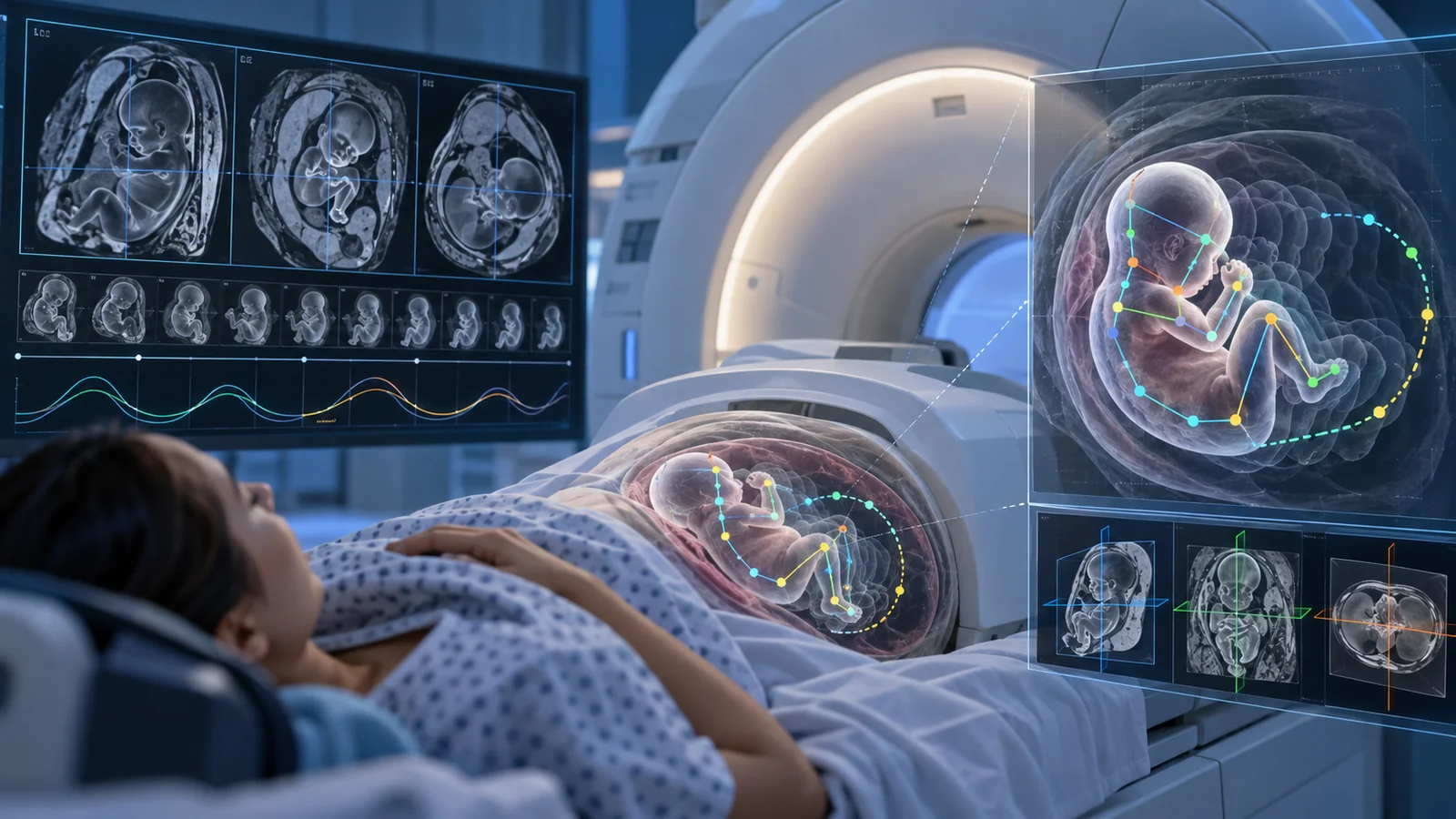
E(3)-Pose learns the physical symmetries of the fetal brain and estimates head position from rapid 3D MRI. The goal is to let future scanners adjust diagnostic images as the fetus moves.
Compostable polyesters carrying degrading enzymes inside the material broke down strongly from coastal water to depths of 5,503 metres. The approach could make some plastics less persistent at sea, but it is not yet a solution for conventional plastic waste.
Measurements in an electron-doped copper oxide directly link superconductivity to antiferromagnetic spin fluctuations. The result resolves an important part of the puzzle, but not the mechanism behind the highest transition temperatures.