Small strains trigger an unusually large resistance response in twisted graphene
Researchers stretching two slightly rotated, atom-thin graphene sheets measured an electrical response more than a hundred times as sensitive as in ordinary metals, adding a new way to probe quantum materials.
·4 min read
Concept illustration of mechanical strain in twisted bilayer graphene, not a micrograph, measurement or figure from the study.Illustration generated with OpenAI for Progress Radar
A new way to probe a quantum material
Two graphene sheets, each only one atom thick, can acquire radically different electronic properties when one is rotated slightly relative to the other. Near a twist angle of 1.1 degrees, often called the magic angle, electrons can interact particularly strongly. This makes the material a valuable experimental platform for investigating superconductivity and other collective quantum states.
Researchers at the University of Washington and collaborating institutions now report that controlled mechanical strain can strongly alter electrical resistance in these graphene structures. Their study, 'Giant elastoresistance in magic-angle twisted bilayer graphene,' was published in Science on 12 November 2026. The findings had previously been available in a May 2025 preprint.
Strain adjusted during measurement
When two graphene layers are stacked with a small twist, they produce a larger geometric pattern known as a moiré pattern. Even subtle changes in the shape of the atomic lattice can affect how electrons move. Such distortions have often been unintended consequences of making samples, making them difficult to separate from other effects.
The team attached graphene samples to a device that expands or contracts when voltage is applied. This allowed them to vary strain continuously along one direction while measuring electrical transport. Controlled strain becomes an additional experimental variable alongside twist angle, electron filling and temperature.
Over a hundred times the sensitivity of ordinary metals
Near the magic angle, the researchers observed exceptionally strong elastoresistance, meaning a change in electrical resistance relative to the amount of applied deformation. The gauge factor was more than two orders of magnitude greater than in conventional metals, or over a hundred times as large. This does not mean that the resistance itself necessarily became a hundred times higher. It means that resistance was far more sensitive to strain.
The response depended on electronic band filling and temperature. In selected regimes it displayed Curie–Weiss-like temperature dependence, with the response growing strongly as the sample cooled. The researchers discuss possible explanations including electronic nematic fluctuations and fluctuations in internal electronic degrees of freedom. The experiment does not uniquely establish which microscopic mechanism dominates.
A research tool, not a finished device
The approach matters because strain changes the geometry experienced by the electrons themselves. Such a large response makes controlled deformation a promising way to investigate how collective electronic states emerge and change. The researchers aim to make the technique easier to reproduce and to extend it to other atomically thin materials.
The study does not demonstrate a new superconductor, room-temperature superconductivity or a ready-to-use electrical sensor. The strong response was observed in specially prepared samples under controlled laboratory conditions, with particularly pronounced effects at low temperatures. For now, the advance is a new experimental way to interrogate a complex quantum material.
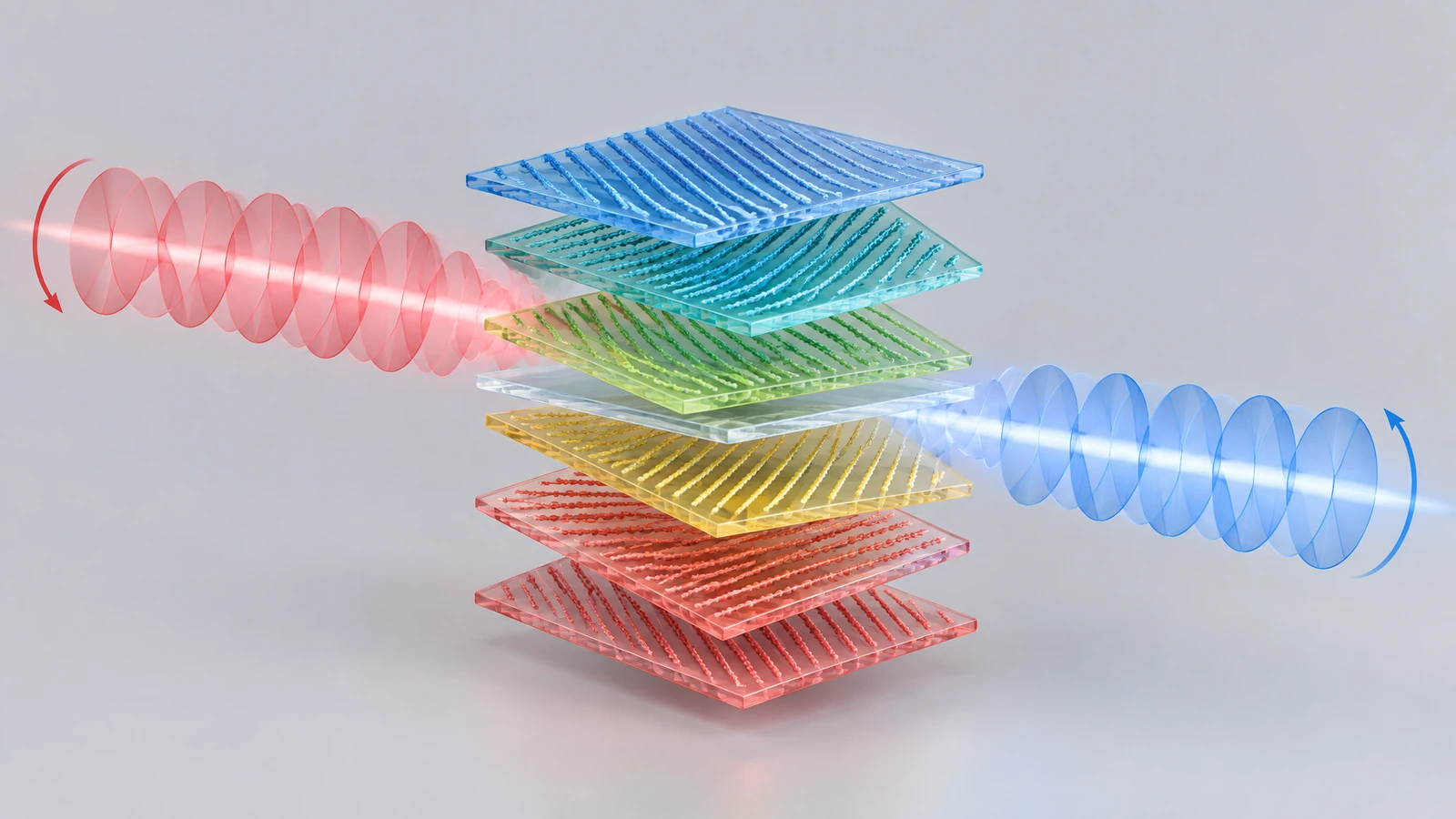
RIKEN researchers built an optical helix by rotating and stacking ultrathin polymer films. Layer orientation, spacing and doping tune the response from visible to near-infrared light.
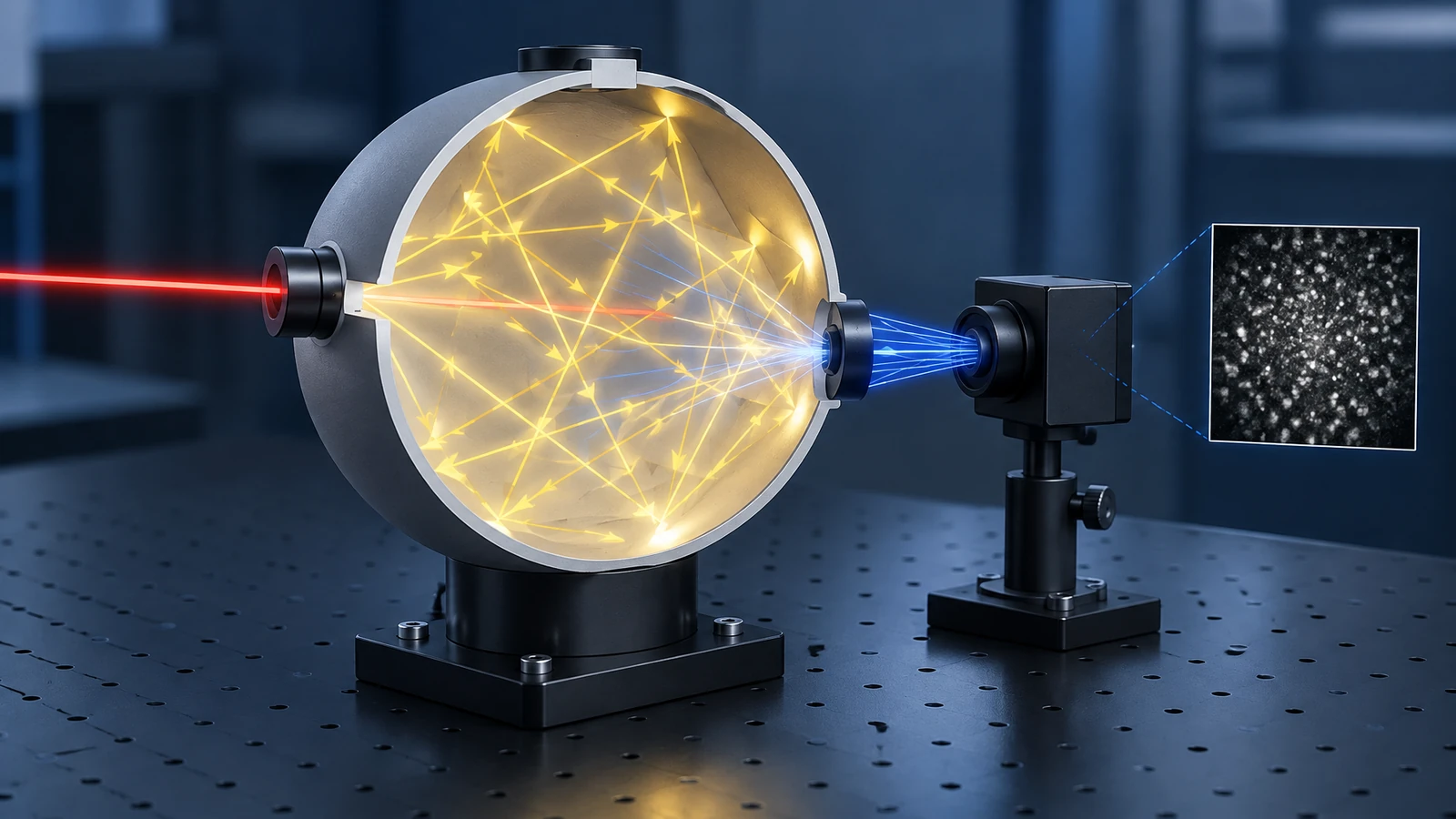
A new study uses an integrating sphere to turn irregular light patterns into exceptionally precise spectral measurements, reporting roughly 80-fold better resolution than earlier speckle spectrometers.
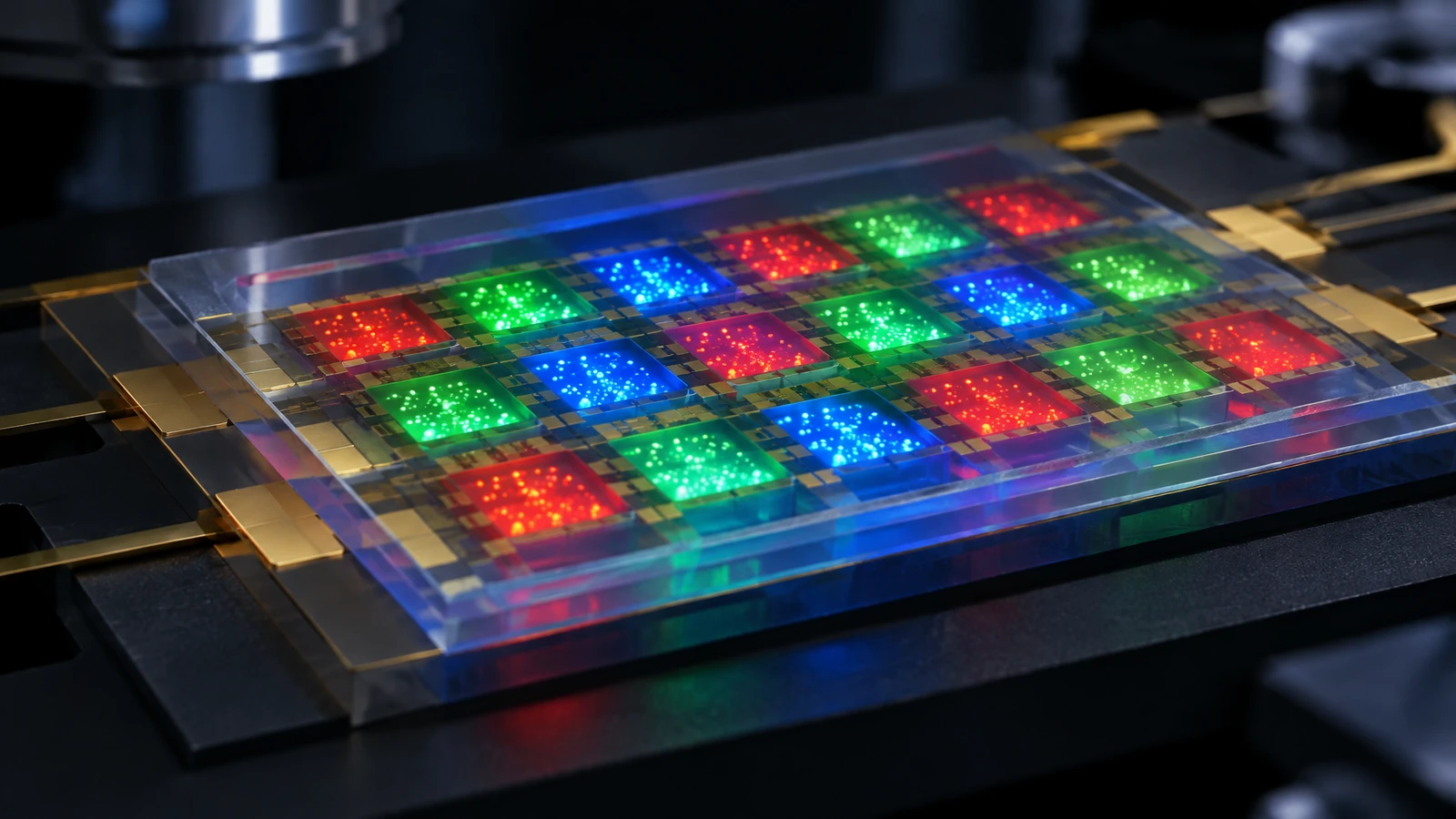
A new inverted architecture enables quantum-dot-electrolyte LEDs in all three primary colors, combining high efficiency with laboratory-measured stability.