Scattered light enables a spectrometer with six-femtometre resolution
A new study uses an integrating sphere to turn irregular light patterns into exceptionally precise spectral measurements, reporting roughly 80-fold better resolution than earlier speckle spectrometers.
·4 min read
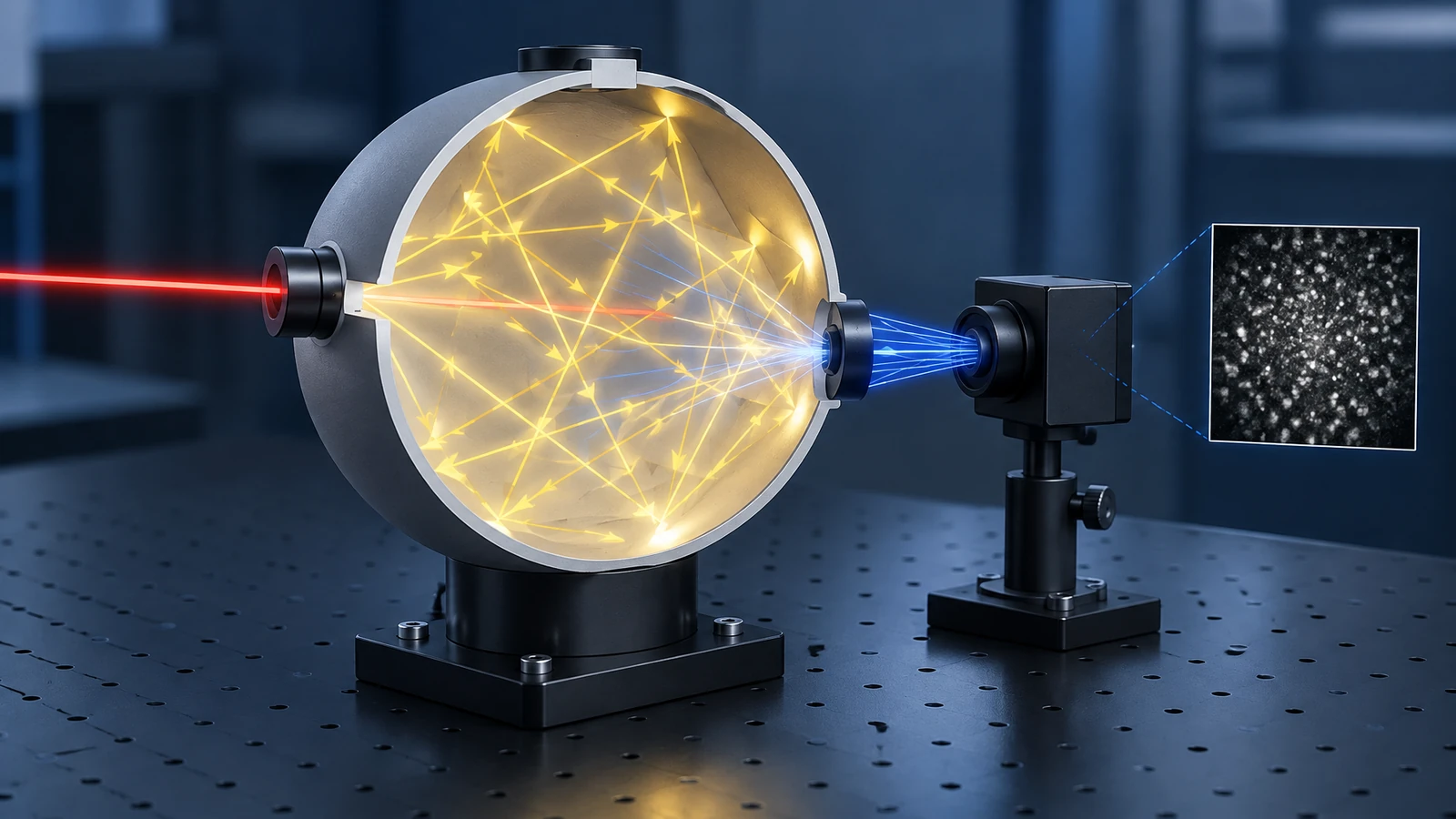
Concept illustration of the speckle spectrometer principle, not a photograph or measurement from the study.Illustration generated with OpenAI for Progress Radar
When laser light undergoes repeated scattering, it forms a granular pattern of bright and dark spots. These patterns may look random, but small changes in wavelength alter them in measurable ways. Researchers have now used that effect to build a spectrometer with exceptionally high resolution.
The study was published in Nature Communications on November 7. At a wavelength of 780 nanometres, the researchers report a resolution of six femtometres, or 0.000006 nanometres. That corresponds to roughly three megahertz in frequency and a resolving power of 1.3 × 10⁸.
A sphere that gives light many paths
A spectrometer distinguishes different wavelengths of light. In a speckle spectrometer, an interference pattern produced by scattered light acts as a signature of the light's spectral content. Earlier instruments of this type have generally had limited resolution compared with the most precise laboratory techniques.
The researchers directed light into an integrating sphere, a cavity in which light is scattered repeatedly. The many different optical paths make the interference pattern highly sensitive to tiny wavelength changes. By associating patterns with known spectral signals, the system can subsequently distinguish closely spaced frequencies.
The reported resolution is about 80 times better than previous speckle-based implementations. That comparison is within this class of instrument, not a claim that all other spectrometers are less precise.
Tests with laser signals and rubidium
The team tested sidebands produced by an electro-optic modulator. The inferred signal powers agreed with expected values to within one percent. They also measured the fine structure of an optical transition in rubidium-85, obtaining spectra that differed by no more than 3.7 percent from measurements referenced to a separate wavemeter.
These experiments show that the high resolution can be used for more than separating two idealized light frequencies. The figures are nevertheless specific to the researchers' setup and measurement conditions. They do not demonstrate a mass-produced instrument or identical performance in every environment.
Potential applications in precision measurement
The approach could be relevant to atomic spectroscopy, laser systems and photonic measurement techniques that need to resolve very small frequency differences. It turns scattering, often treated as an obstacle, into the basis of the measurement.
Further work will need to establish how stable and practical the method is outside the researchers' laboratory setup. The study demonstrates a new capability for speckle spectroscopy, not a replacement for every established high-resolution spectrometer.
Researchers stretching two slightly rotated, atom-thin graphene sheets measured an electrical response more than a hundred times as sensitive as in ordinary metals, adding a new way to probe quantum materials.
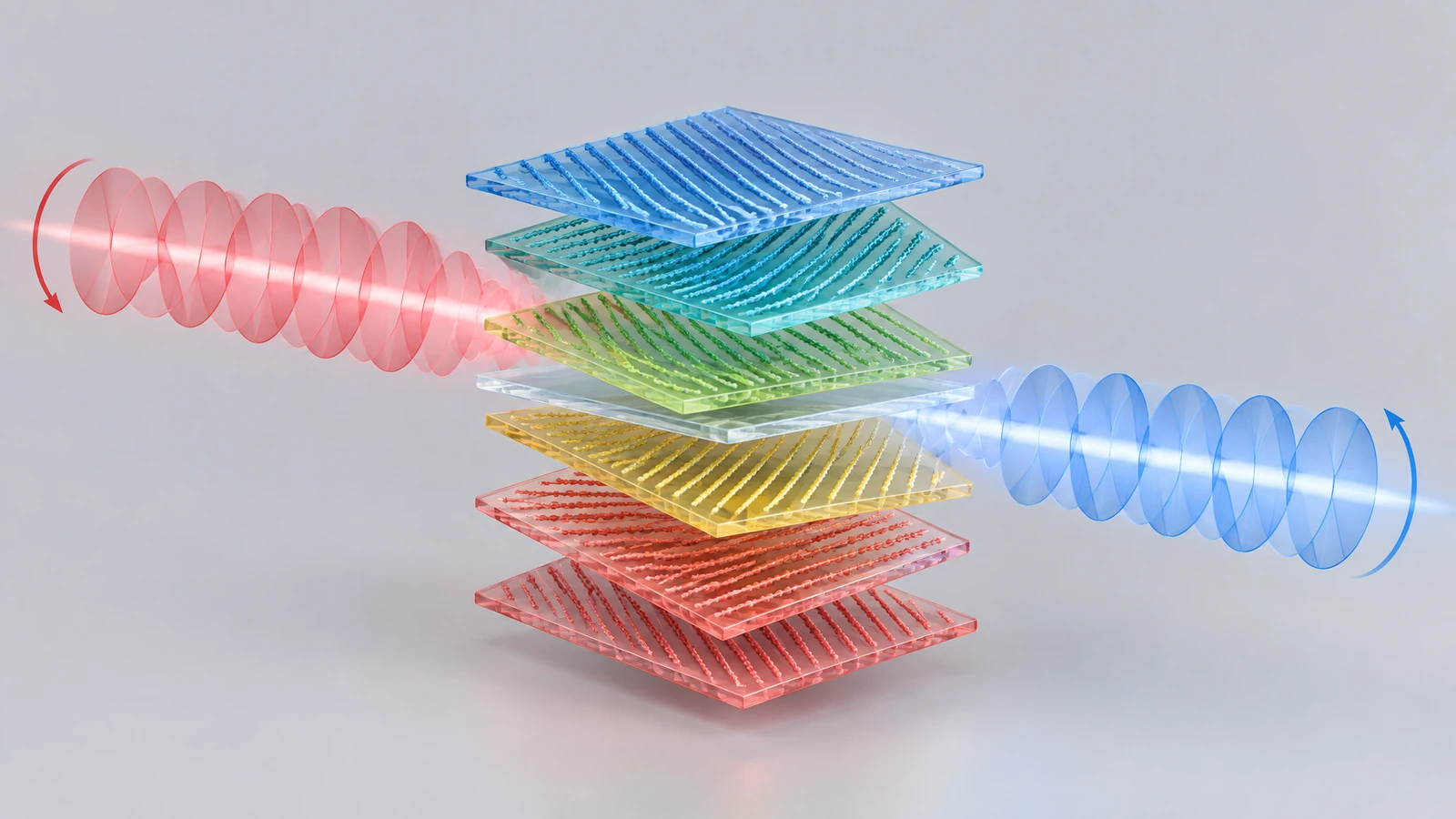
RIKEN researchers built an optical helix by rotating and stacking ultrathin polymer films. Layer orientation, spacing and doping tune the response from visible to near-infrared light.
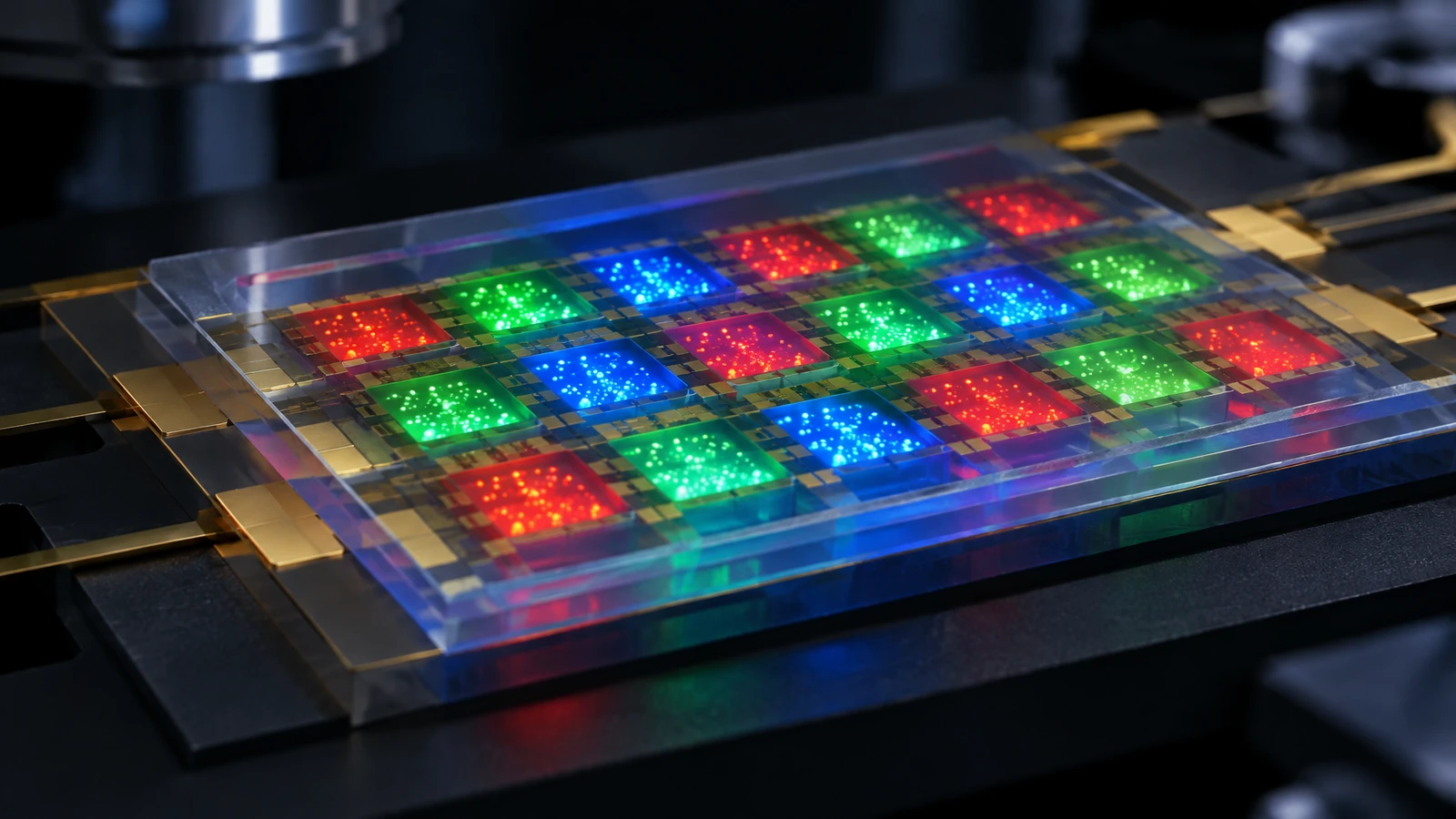
A new inverted architecture enables quantum-dot-electrolyte LEDs in all three primary colors, combining high efficiency with laboratory-measured stability.