Robot assembles part of an antenna structure in orbit
Caltech and DARPA report robotic assembly of a truss section in space. The demonstration establishes an orbital construction step, not a completed antenna.
·4 min read
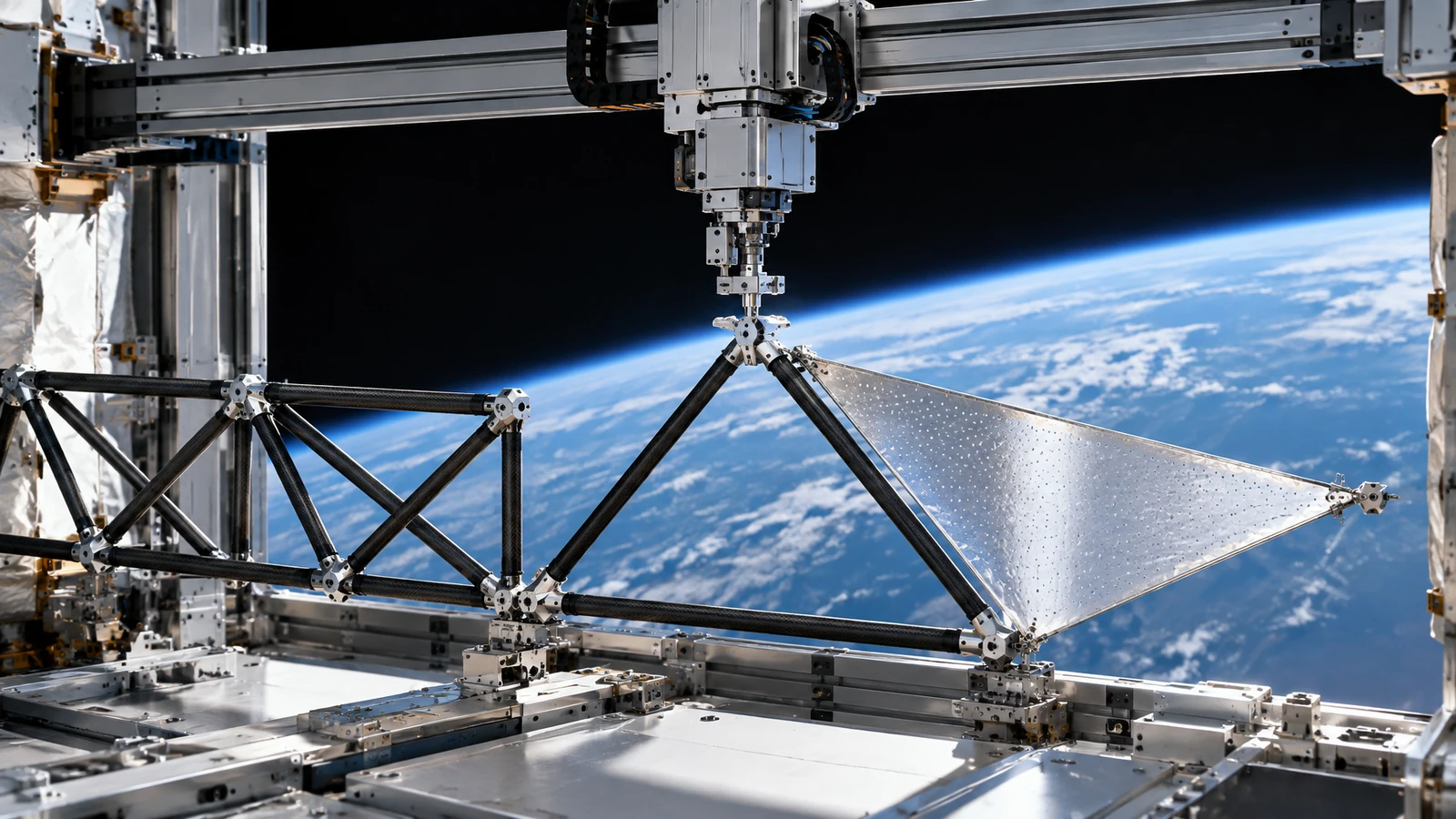
Concept illustration of the ASTRA assembly principle. Not a mission photograph or a completed antenna.Illustration generated with OpenAI for Progress Radar
Large antennas and telescopes usually have to be designed to fit inside a rocket. An alternative is to launch smaller components and assemble them in orbit. Researchers at Caltech have now demonstrated a step toward that approach in space.
On November 5, Caltech and the US research agency DARPA announced that the ASTRA experiment had built a new section of a truss structure in low Earth orbit. They describe it as the first automated assembly of this kind of structure in space. It was a limited technology demonstration, not a finished space antenna.
A third section assembled in orbit
ASTRA stands for Autonomous In-Space Tensioned Reflector Assembly and is part of DARPA's NOM4D program. The payload launched on March 30, 2026, aboard Momentus's Vigoride 7 spacecraft on SpaceX's Transporter-16 mission.
The system carried two preassembled truss sections. After deploying them, the robot built a third section from separate components. A manipulator positioned composite tubes in purpose-built joints and worked with a thin reflective sheet intended to form part of the structure.
The intended result was a reflector antenna approximately 1.4 meters in diameter, comprising eleven sections in total. Caltech says time constraints and technical difficulties meant that only the initial portion of the antenna could be built. The complete planned reflector was not demonstrated.
Automated assembly with ground support
DARPA describes the assembly mechanism as a relatively simple robot that moves along three linear axes. The advance is not a sophisticated artificial intelligence system, but a repeatable mechanical process for connecting lightweight components.
The operation was not entirely independent of people. No astronauts performed the assembly, but engineers on the ground sent commands, inspected images from the payload, and tested solutions on a matching laboratory robot when problems arose. Caltech describes only a handful of short communication windows each day.
The experiment therefore demonstrates local automated assembly in orbit with ground support. It does not establish that a robot can independently plan and complete arbitrary space structures.
Why build structures in space?
Rocket fairings place a practical limit on the size of structures launched fully assembled or folded for deployment. Orbital assembly could eventually allow larger reflectors for radio communications and space telescopes, or extensive solar-power structures.
Caltech and DARPA regard the demonstration as an early step toward that possibility. But scaling from one assembled section to antennas hundreds of meters across will require further experiments, greater operational reliability, and evidence that the process can be repeated at much larger scales.
A Nature experiment demonstrates position verification using a Bell test across a quantum network. The result is promising, but its demonstrated security applies to a defined adversary model.
Two studies published on 16 November show autonomous error correction protecting a logical qubit beyond the best physical qubit in its system. One reports a 2.0-millisecond lifetime, 18 percent above its reference.
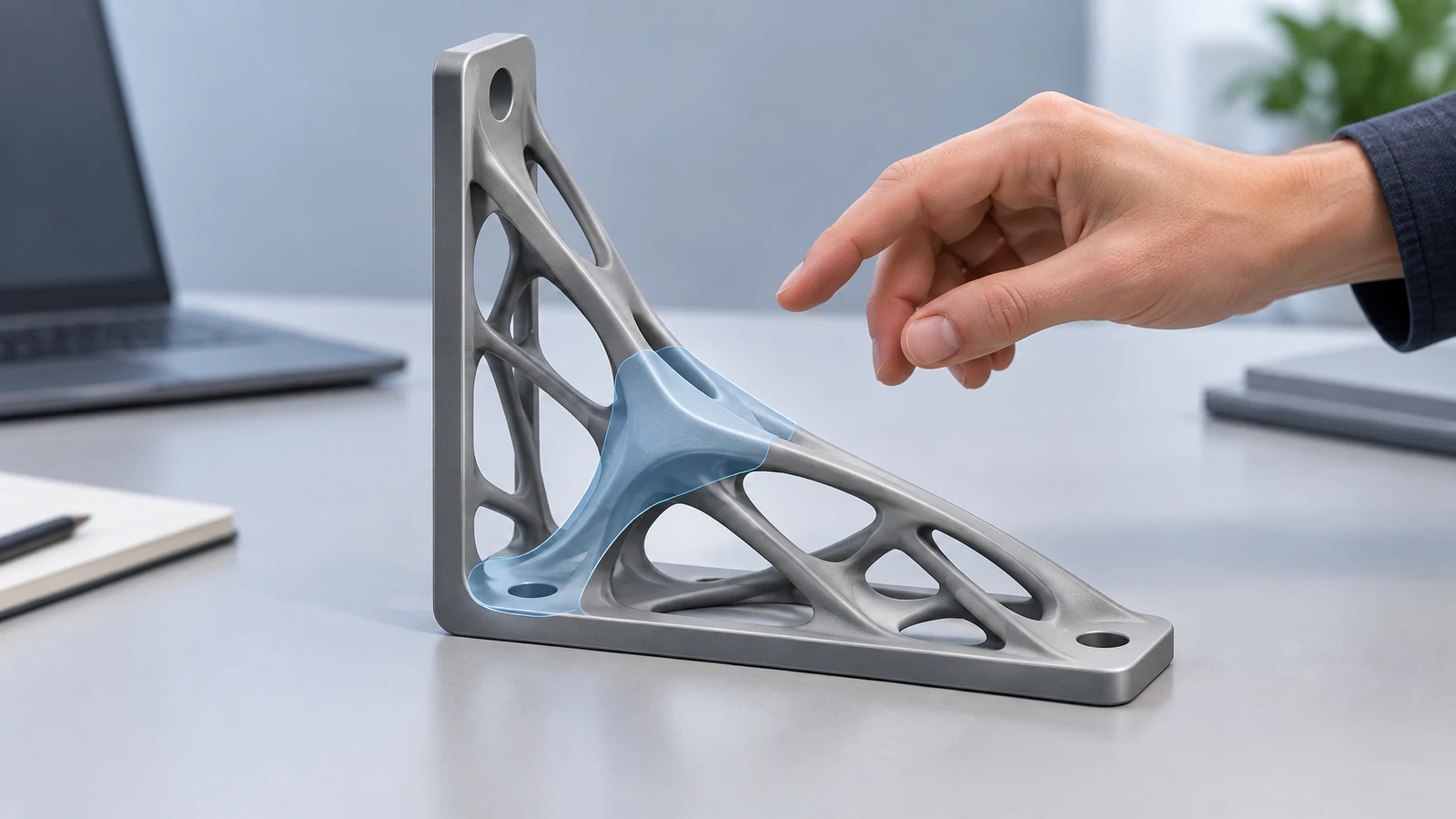
MIT researchers developed an AI assistant that recommends regions to modify during algorithmic structural design. One demonstration increased calculated linear buckling load by 39%, but the approach has not yet been validated in a broad study with human designers.