New semiconductor device combines light sensing and memory
A III-nitride sensor-memristor detects light and retains a response in the same device. Researchers report high light sensitivity and operation at temperatures up to 300 °C.
·3 min read
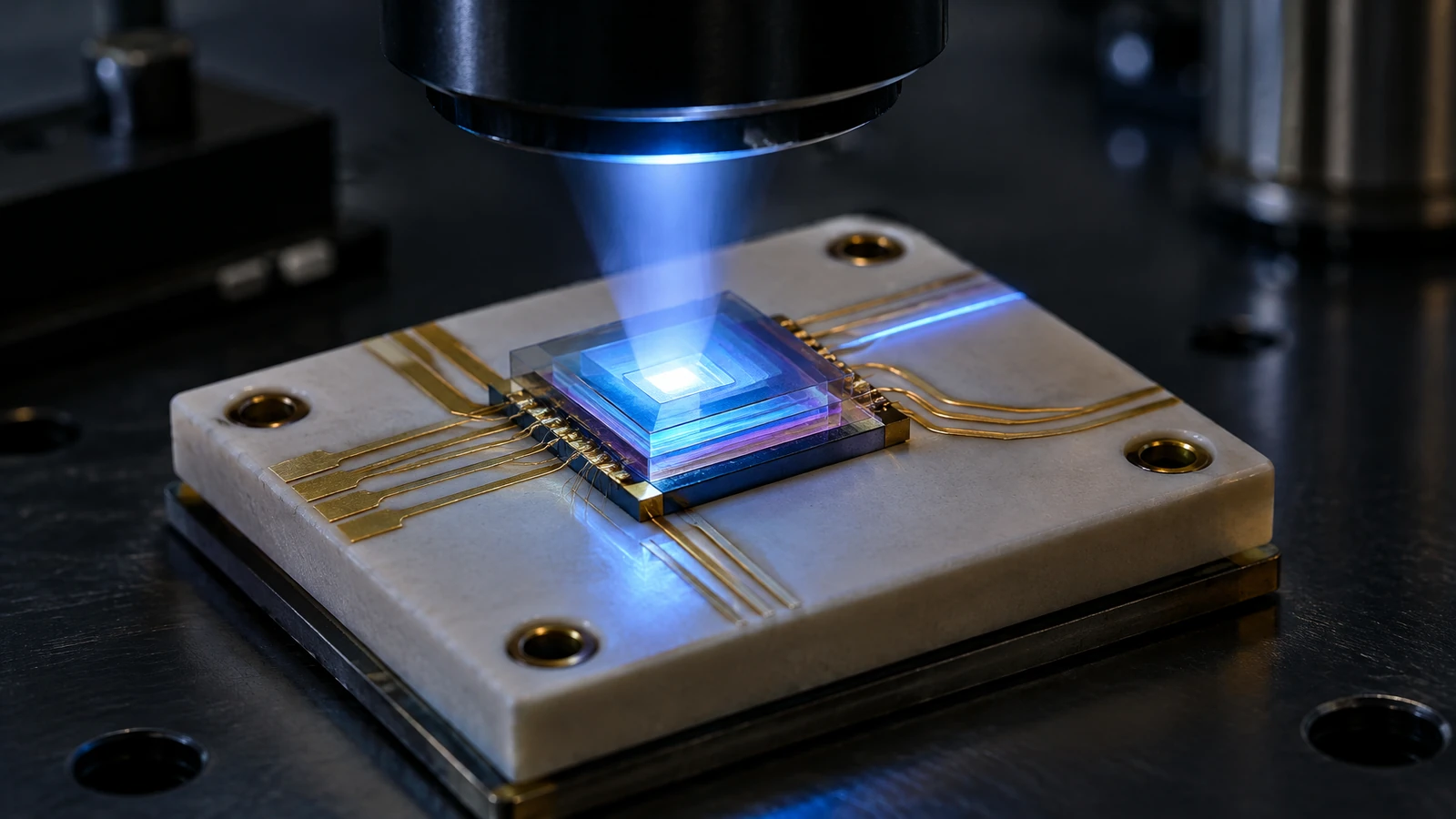
Illustration of an optoelectronic sensor-memristor, not a photograph of the researchers' actual device.Illustration generated with OpenAI for Progress Radar
Moving computation all the way to the sensor
A camera or other intelligent sensing system usually performs different jobs in different parts of its hardware. A sensor captures light, data moves elsewhere, and memory and processors handle storage and analysis. Moving that data costs both time and energy.
In a peer-reviewed Nature Materials study, researchers present an optoelectronic sensor-memristor based on III-nitride semiconductors. The goal is to combine several of those functions inside the sensor itself: the device can respond to light while providing a memory function relevant to what is known as in-sensor computing.
The researchers exploit a property already present in the III-nitride materials. Electrical polarization at interfaces in the heterostructure creates fields that separate electrons and holes generated when light reaches the material. This reduces the recombination that can otherwise weaken the electrical signal produced by light.
A strong response to very weak light
In sensor-memristor mode, the researchers report light sensitivity at the level of nanowatts per square centimetre. Responsivity reaches the level of 10^6 amperes per watt, while the on/off ratio is at the level of 10^5.
Those figures describe the experimental device, not a complete camera or AI system. Even so, the combination is notable because the same structure can both detect optical signals and retain an electrical state influenced by previous signals.
By controlling the applied electrical bias, the researchers could also change the operating mode so the sensor-memristor acts as a high-speed detector. A single material platform can therefore support different optoelectronic modes without requiring a separate device for each function.
Operating at temperatures up to 300 degrees
III-nitrides are already used in technologies including LEDs and power electronics, and the material family is known for tolerating demanding conditions. In the new study, the device maintained high performance at temperatures up to 300 °C.
The researchers also emphasize that III-nitrides are compatible with industrial-scale semiconductor manufacturing and that the approach aligns with CMOS integration. That distinguishes the platform from some experimental in-sensor concepts that can show strong laboratory properties while remaining difficult to manufacture at scale.
This does not mean the researchers demonstrated a finished production process or a commercial imaging chip. The work primarily establishes a design principle and laboratory device that combine sensing, memory-like behavior and multiple operating modes on one platform.
Toward sensors that process data where it originates
In-sensor computing matters because cameras and other sensors generate growing volumes of data. If some processing can happen where a signal is captured, the need to shuttle large amounts of data between separate components could be reduced.
The new study shows that polarization in III-nitride heterostructures can be actively used for this purpose rather than remaining merely a background material property. The researchers have not, however, demonstrated that complete machine-vision systems will automatically inherit the performance advantages measured in an individual device.
The next challenge is therefore not only to improve laboratory metrics, but to show how these sensor-memristors can be scaled, interconnected and integrated into larger systems. The result provides a new physical building-block principle for that development, not a finished intelligent camera.
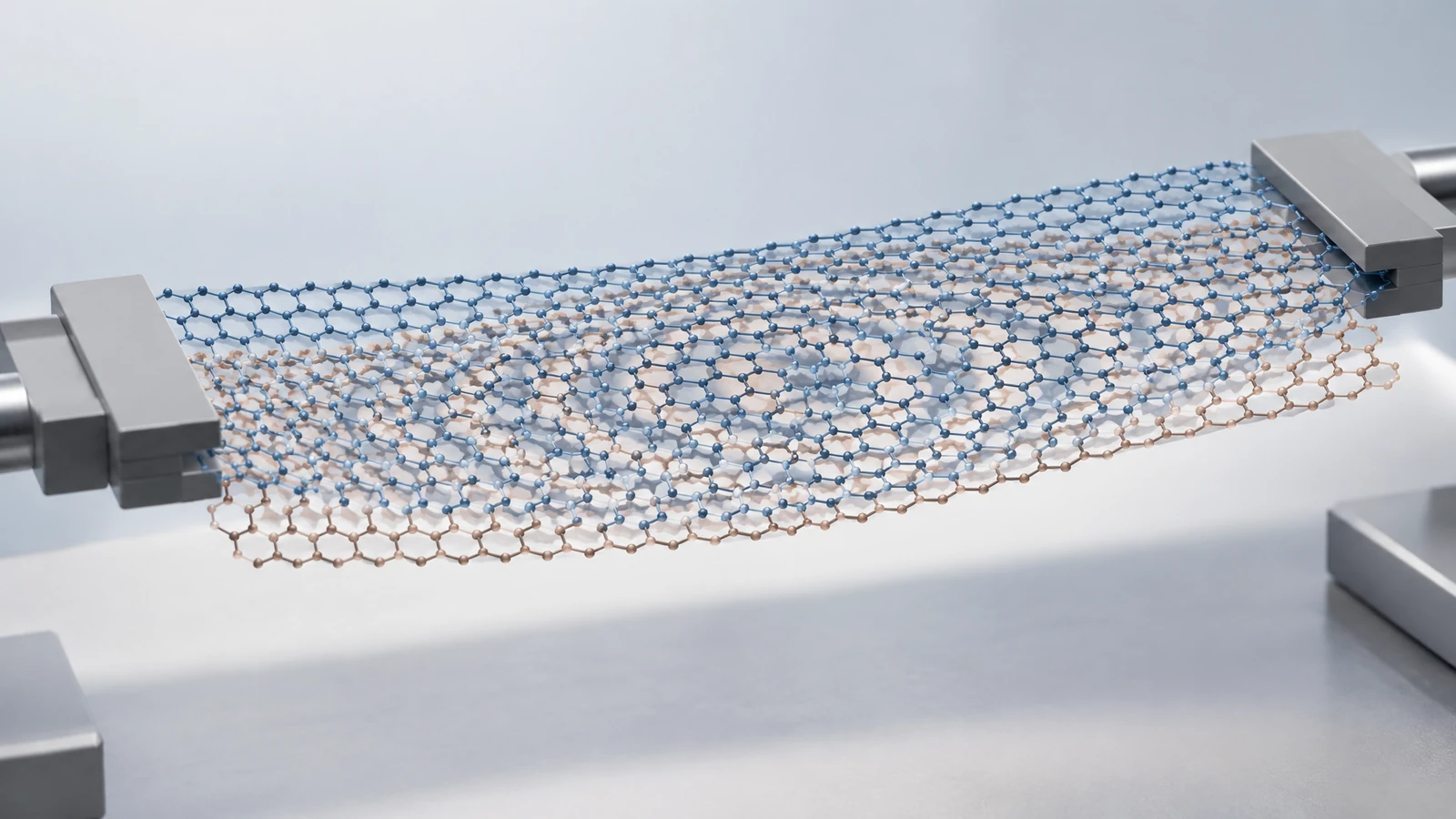
Researchers stretching two slightly rotated, atom-thin graphene sheets measured an electrical response more than a hundred times as sensitive as in ordinary metals, adding a new way to probe quantum materials.
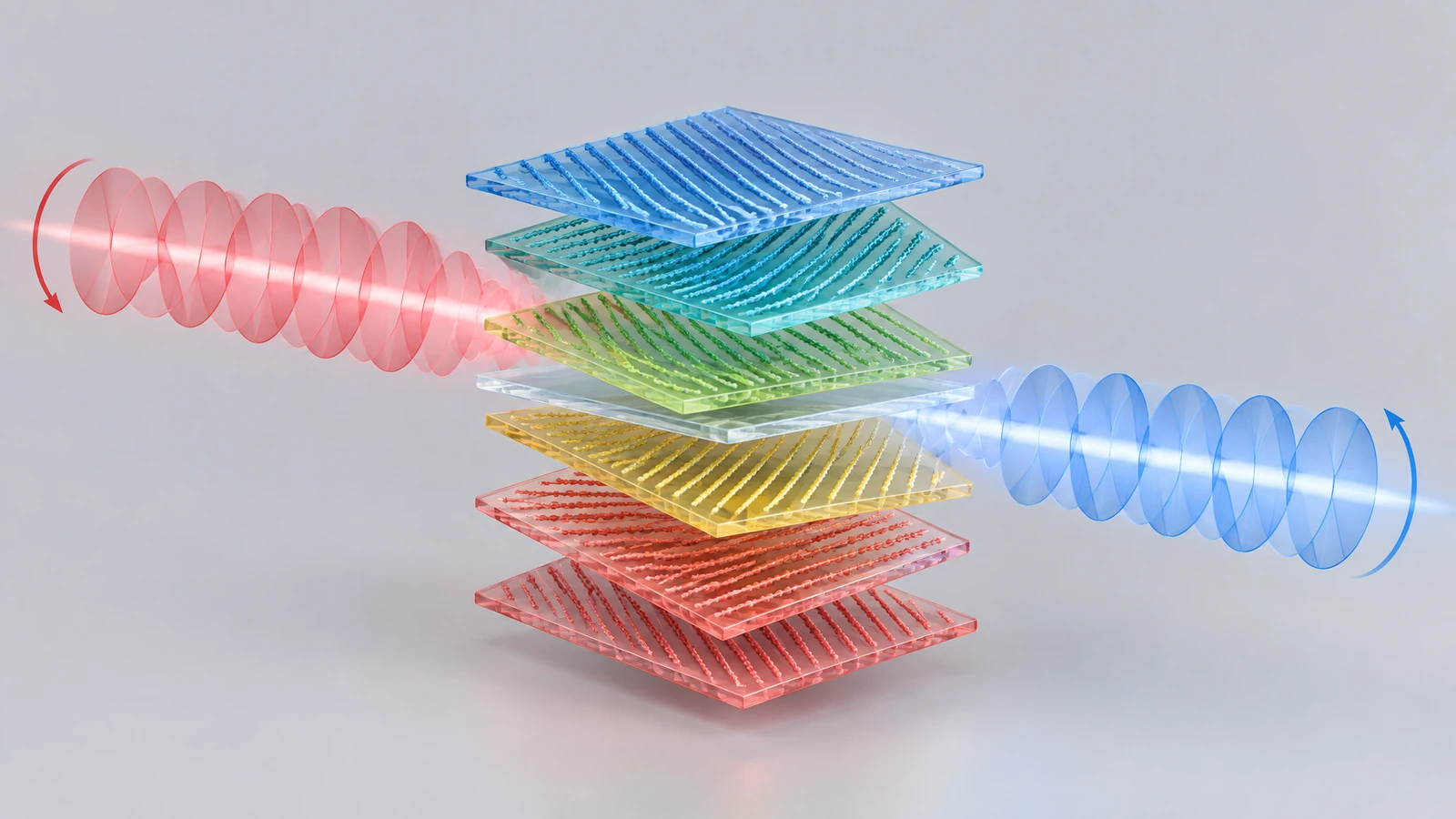
RIKEN researchers built an optical helix by rotating and stacking ultrathin polymer films. Layer orientation, spacing and doping tune the response from visible to near-infrared light.
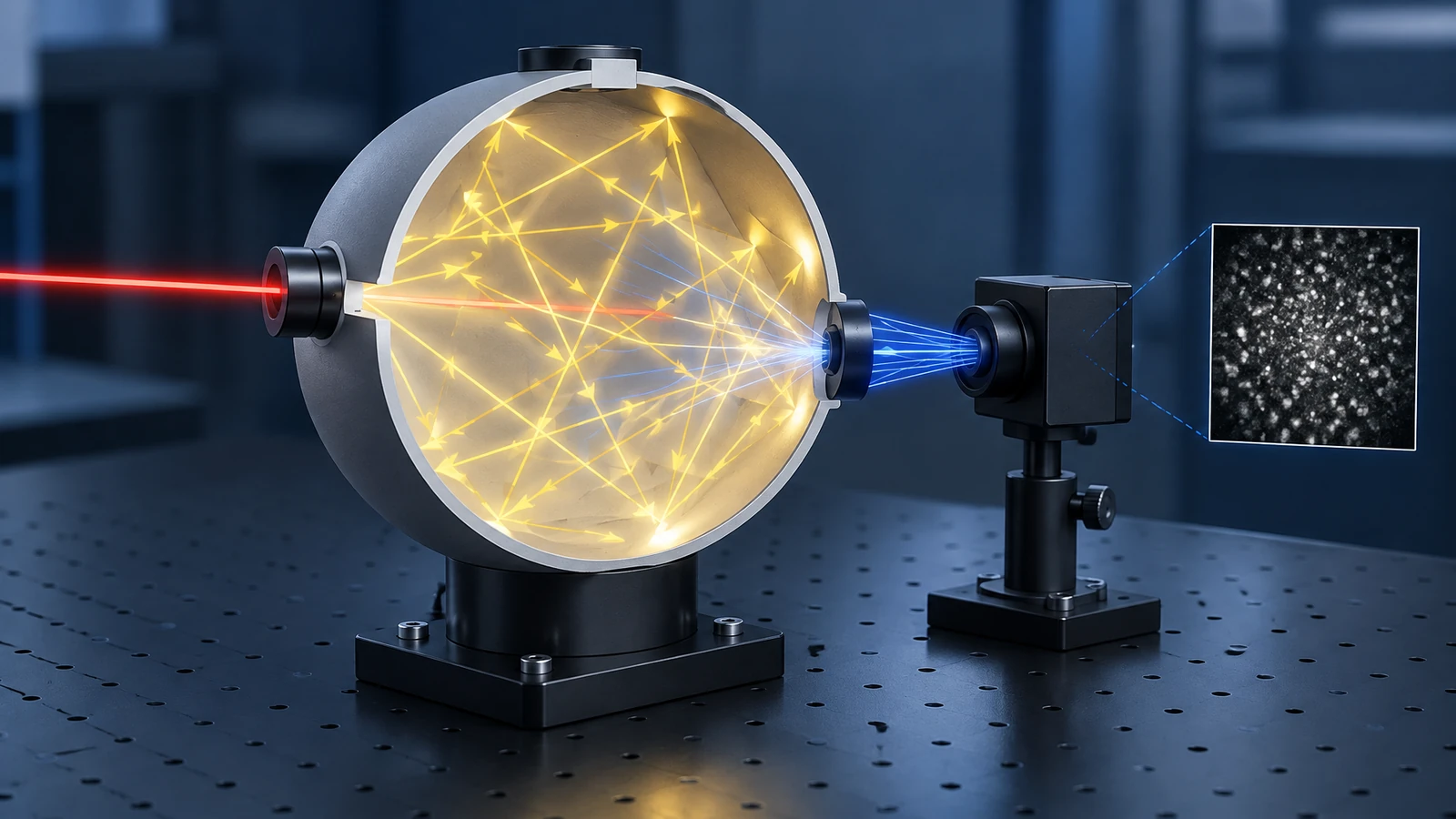
A new study uses an integrating sphere to turn irregular light patterns into exceptionally precise spectral measurements, reporting roughly 80-fold better resolution than earlier speckle spectrometers.