Membrane separates lithium from magnesium-rich brine
Precise control of subnanometre pores produced very high lithium selectivity, including in untreated natural brine containing large amounts of magnesium.
·4 min read
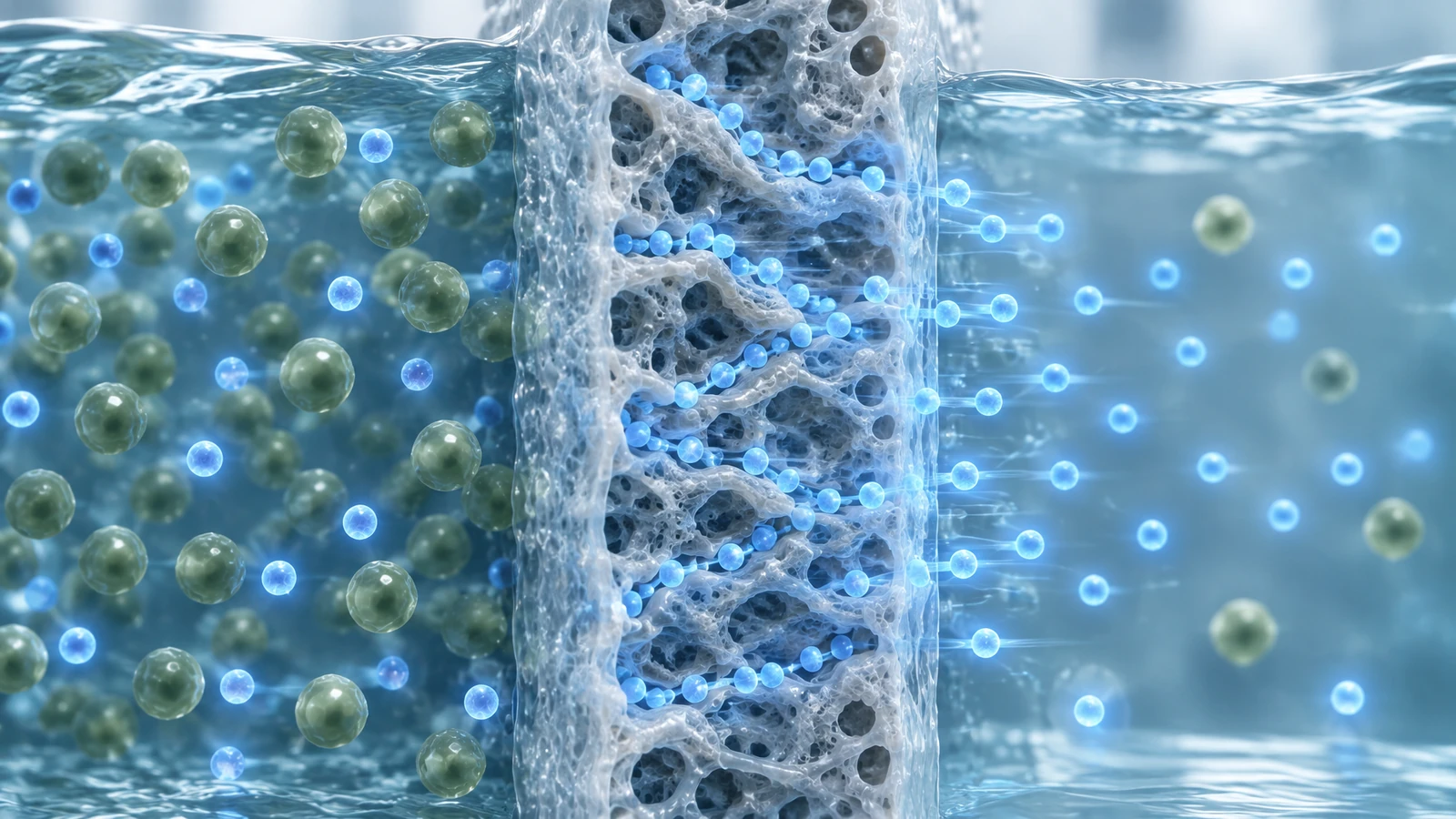
Illustration of selective ion transport through a cross-linked membrane. Not a photograph of the experimental membrane.Illustration generated with OpenAI for Progress Radar
Small differences between ions create a major separation problem
Lithium occurs in many brines alongside large quantities of other ions. Magnesium is particularly difficult to separate because the properties of magnesium and lithium ions mean conventional membranes often allow both to pass.
That is an important problem for direct lithium extraction. To recover lithium efficiently from magnesium-rich brine, a membrane must remain permeable enough to transport ions while distinguishing between them with high precision.
In a peer-reviewed Nature Communications study, researchers demonstrate a membrane in which the degree of crosslinking during fabrication is used to control pore size within a very narrow range below one nanometre.
Crosslinking fine-tunes the pores
Crosslinking connects polymer chains into a denser network. By regulating how strongly the material is crosslinked, the researchers could tune the size of the transport channels through the membrane.
The aim was to create pores that exploit differences between lithium and magnesium ions without shutting down ion transport altogether. In electrodialysis experiments, the membrane achieved a Li+/Mg2+ separation factor of up to 6454 when the magnesium-to-lithium mass ratio was 140.
A high separation factor means the membrane strongly favours lithium over magnesium transport under the tested conditions. It is a measure of selectivity, not the fraction of all lithium in a salt lake that could be recovered in a single industrial process.
Tested with natural brine
Laboratory mixtures are useful for isolating mechanisms, but real brine contains many competing ions that can make separation harder. The researchers therefore also tested the membrane using untreated natural salt-lake brine.
There, the magnesium-to-lithium mass ratio was 87 and multiple other ions were present. Even so, the Li+/Mg2+ separation factor remained above 1200.
The researchers also fabricated a membrane measuring 25 × 35 centimetres and reported stable performance over 15 days of repeated operation. That matters because membrane technologies that work only in very small samples can encounter new problems as their area is increased.
A step toward more selective lithium extraction
The results show that the membrane structure can be tuned precisely enough to distinguish ions that are difficult to separate with conventional membranes. The strategy could therefore be useful for lithium extraction from resources where high magnesium content otherwise complicates processing.
But the study is not a demonstration of a finished commercial lithium plant. An industrial process would also have to be assessed for factors including throughput, lifetime over much longer periods, energy consumption, membrane cost, pretreatment and how the complete process chain handles the other substances in the brine.
The central advance is narrower: by using crosslinking as a precise control knob for subnanometre pores, the researchers demonstrated high lithium-magnesium selectivity in both demanding model mixtures and natural brine, while also fabricating the membrane at a substantially larger scale than tiny laboratory samples.
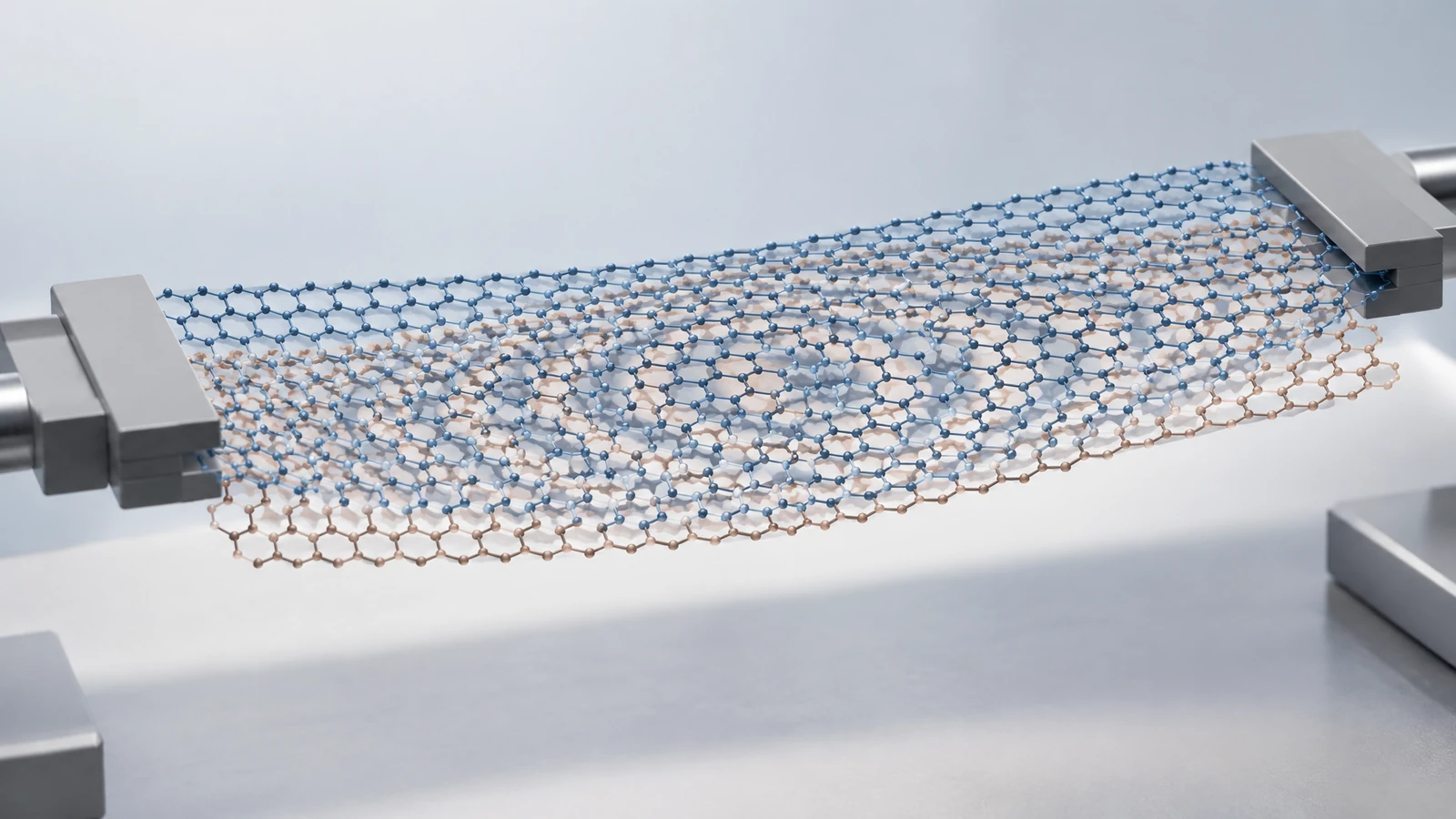
Researchers stretching two slightly rotated, atom-thin graphene sheets measured an electrical response more than a hundred times as sensitive as in ordinary metals, adding a new way to probe quantum materials.
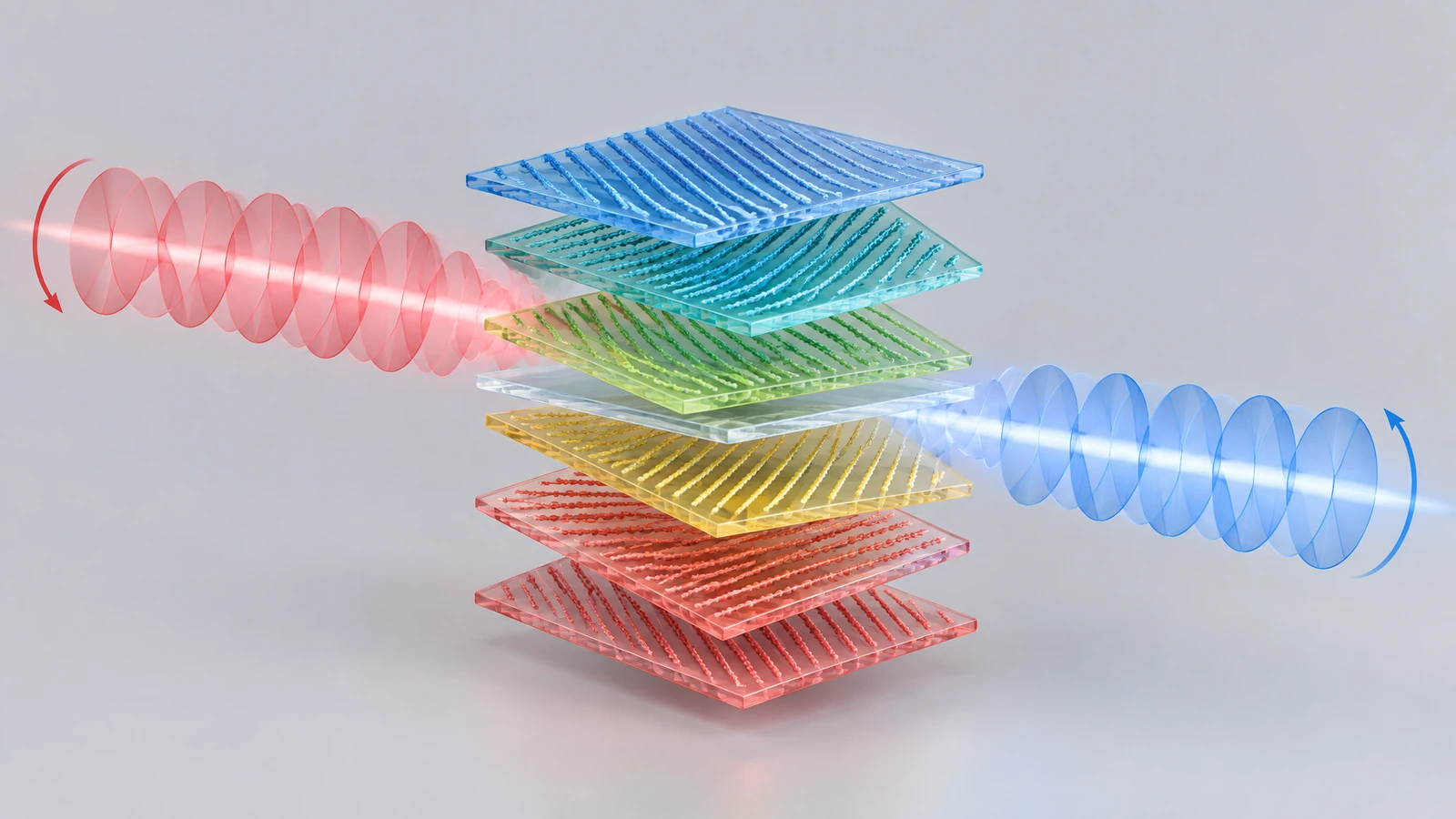
RIKEN researchers built an optical helix by rotating and stacking ultrathin polymer films. Layer orientation, spacing and doping tune the response from visible to near-infrared light.
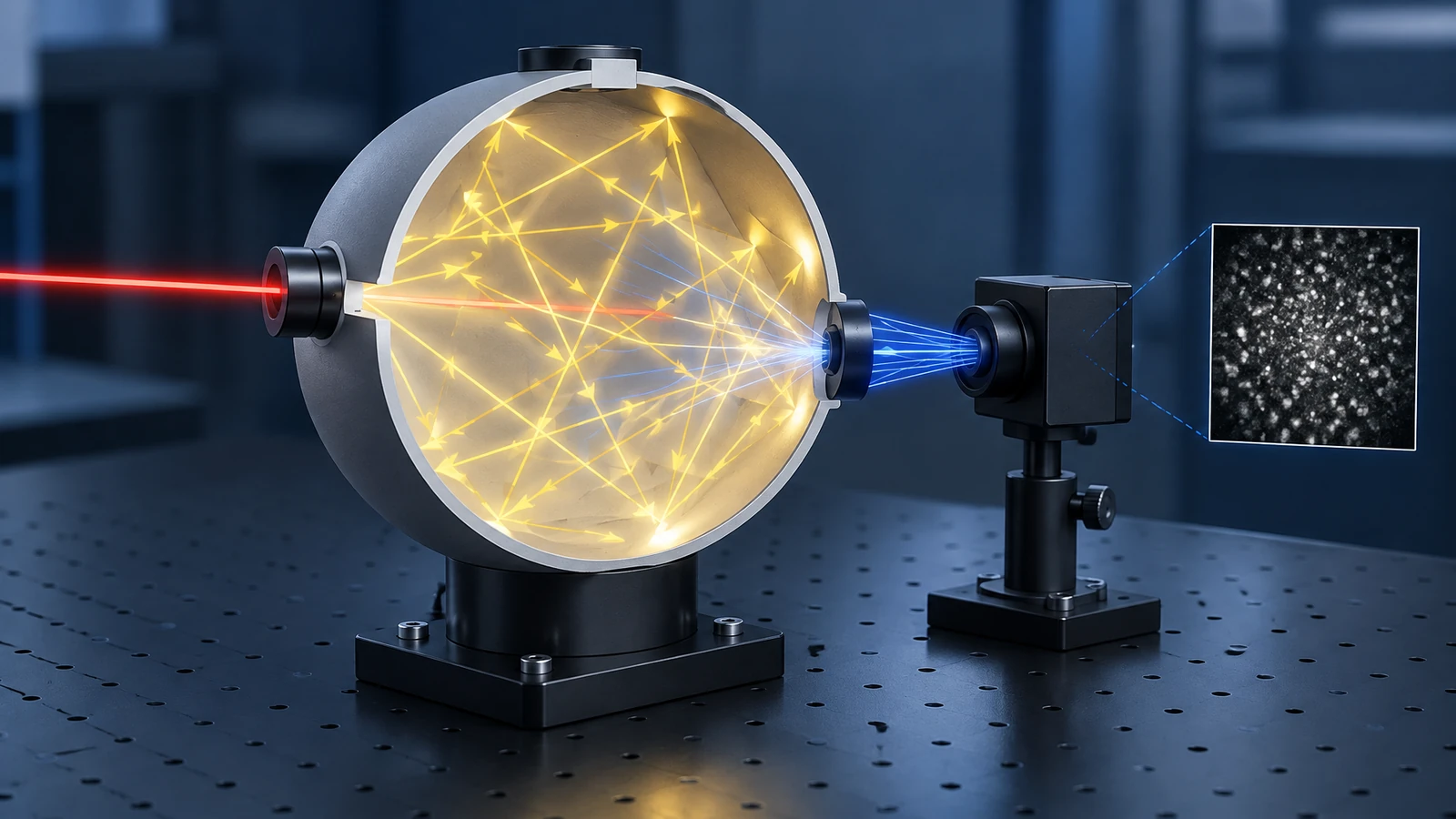
A new study uses an integrating sphere to turn irregular light patterns into exceptionally precise spectral measurements, reporting roughly 80-fold better resolution than earlier speckle spectrometers.