T-Rex uses fast touch feedback to improve robotic manipulation
A robot AI combining vision and language with rapid fingertip sensing averaged 65 percent across 12 contact-rich tasks in a controlled research benchmark.
·5 min read
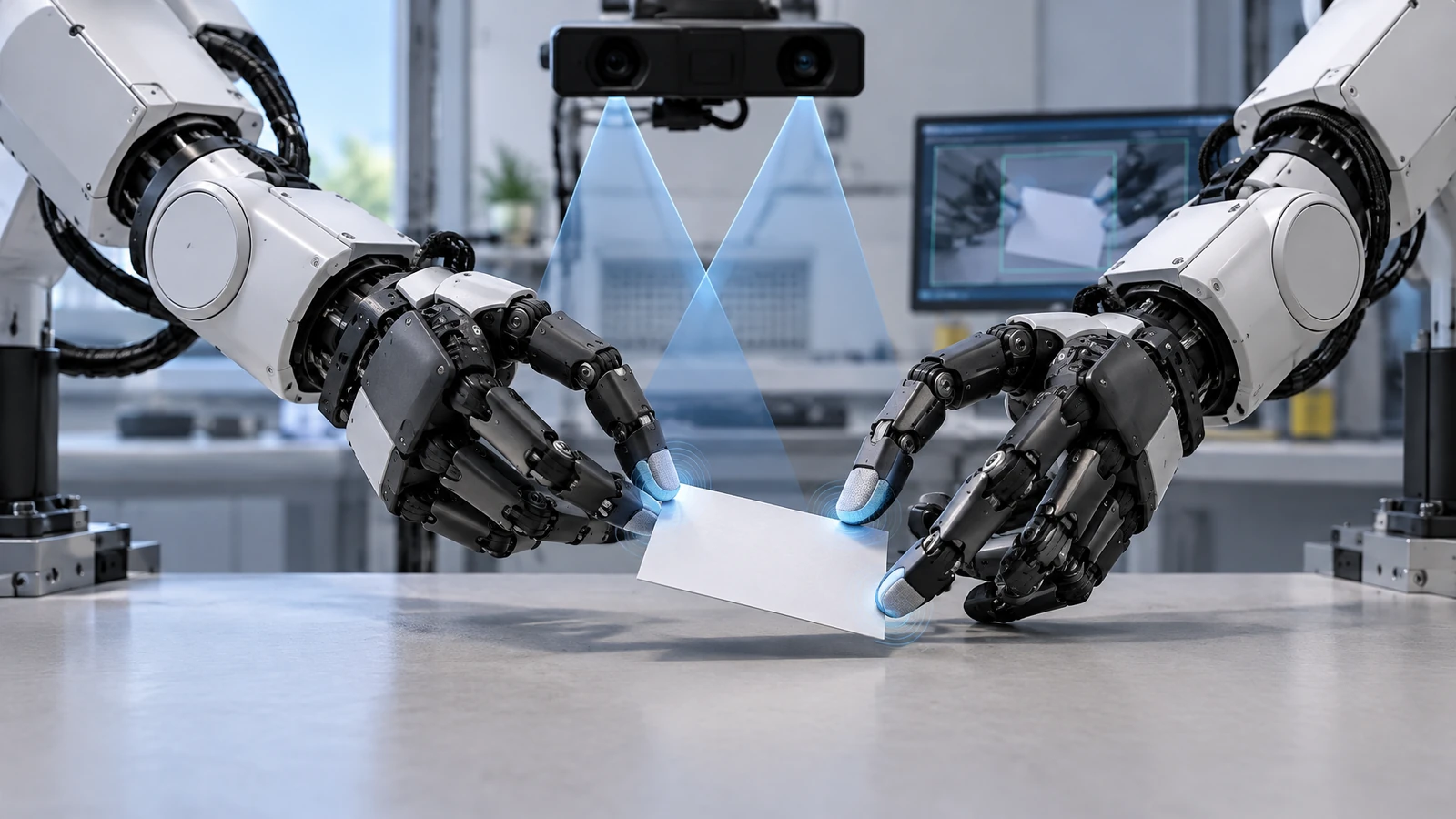
Illustration of the tactile-reactive manipulation principle in T-Rex, not an image from the experiments.Illustration generated with OpenAI for Progress Radar
A robot may see a key and plan how to turn it, yet vision alone cannot tell it how firmly its fingers are pressing or whether the grip is slipping. Such tasks demand adjustments to force while the movement is already under way.
On November 5, Panasonic and research collaborators presented T-Rex, an AI system combining camera- and language-guided planning with faster corrections from fingertip touch sensors. The work is scheduled for presentation at the Conference on Robot Learning (CoRL) on November 9–12. Its accompanying research paper was already available as a preprint in June 2026. The new development is the public announcement, not a claim that the experiments were first performed this week.
Two control speeds in one system
Vision-language-action models, or VLAs, generate robot movements from images and instructions. But their visual processing can be too slow to react as an object begins to slip or deform.
T-Rex uses a slower module to produce the broad action, updating at approximately five times per second. A separate touch-driven module refines the movement at about 20 times per second. The goal is to preserve the overall plan while responding more quickly to changes in physical contact.
Training on video and touch
The researchers report first learning from 22,889 hours of human first-person video. They then used a dedicated dataset of more than 7,700 sequences, totaling roughly 100 hours of bimanual robot manipulation.
The dataset synchronizes camera views, instructions, robot movements, and force and deformation measurements from sensors on ten fingertips. The model was subsequently adapted to each task with about 100 demonstrations. These numbers describe the training procedure, not necessarily the data requirements of a deployed robot.
A 65 percent score in a defined benchmark
The team evaluated T-Rex on 12 contact-rich tasks, including turning a page, transferring an egg, extracting a card, unlocking a door with a key, and screwing in a light bulb. Each task was assessed in 16 trials with varied starting conditions.
T-Rex averaged 65 percent on the researchers' task scores, compared with 35 percent for the strongest baseline. That is a 30-percentage-point difference, not merely a 30 percent relative gain. In a separate analysis removing tactile input, T-Rex's score fell to 42 percent.
The metric needs care: multi-stage tasks can receive partial credit for completed steps, so the average is not necessarily the proportion of trials in which the entire task was finished. Differences between the full models also cannot be attributed to touch alone; the experiment removing tactile input provides more direct evidence for that contribution.
Not yet a general-purpose robot
The results suggest fast touch feedback can help when forces and contact conditions change during manipulation. But 12 controlled tasks do not demonstrate reliable handling of arbitrary objects in unpredictable workplaces.
Panasonic identifies manufacturing and logistics as possible applications, including assembly and handling fragile items. Those are prospective uses, not verified commercial deployments. Wider use would require evaluation across many more tasks, robots, and environments.
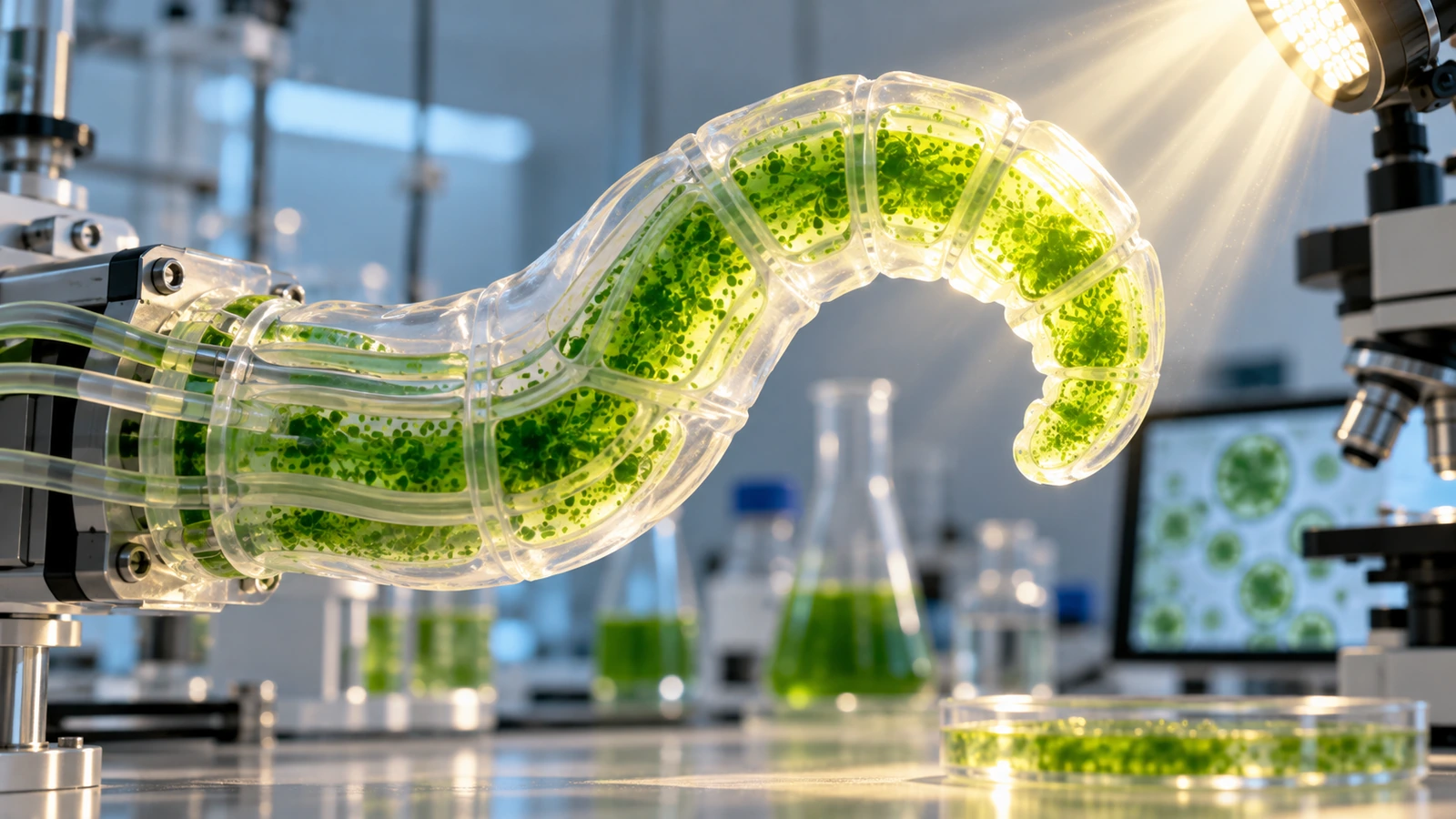
Microalgae embedded with a hydrogel make a soft actuator bend as light switches on and off. Researchers used the principle to build a simple gripper that lifts small objects without a conventional motor or battery.
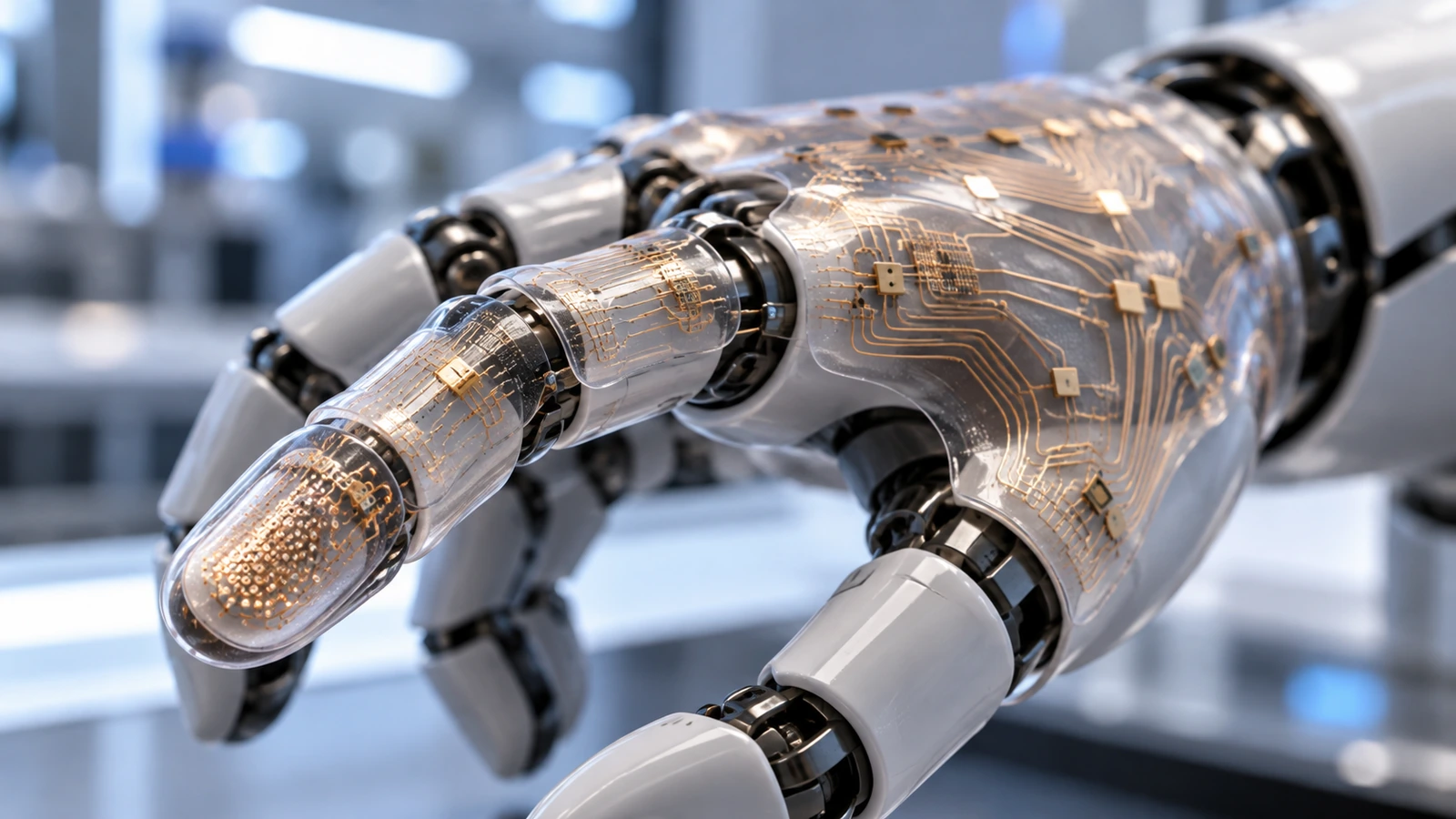
Researchers have developed an artificial skin with more than 10,000 touch sensors that organizes signals more like the human nervous system. In experiments, it let robots detect very fine surface structures and react automatically to potentially harmful contact.
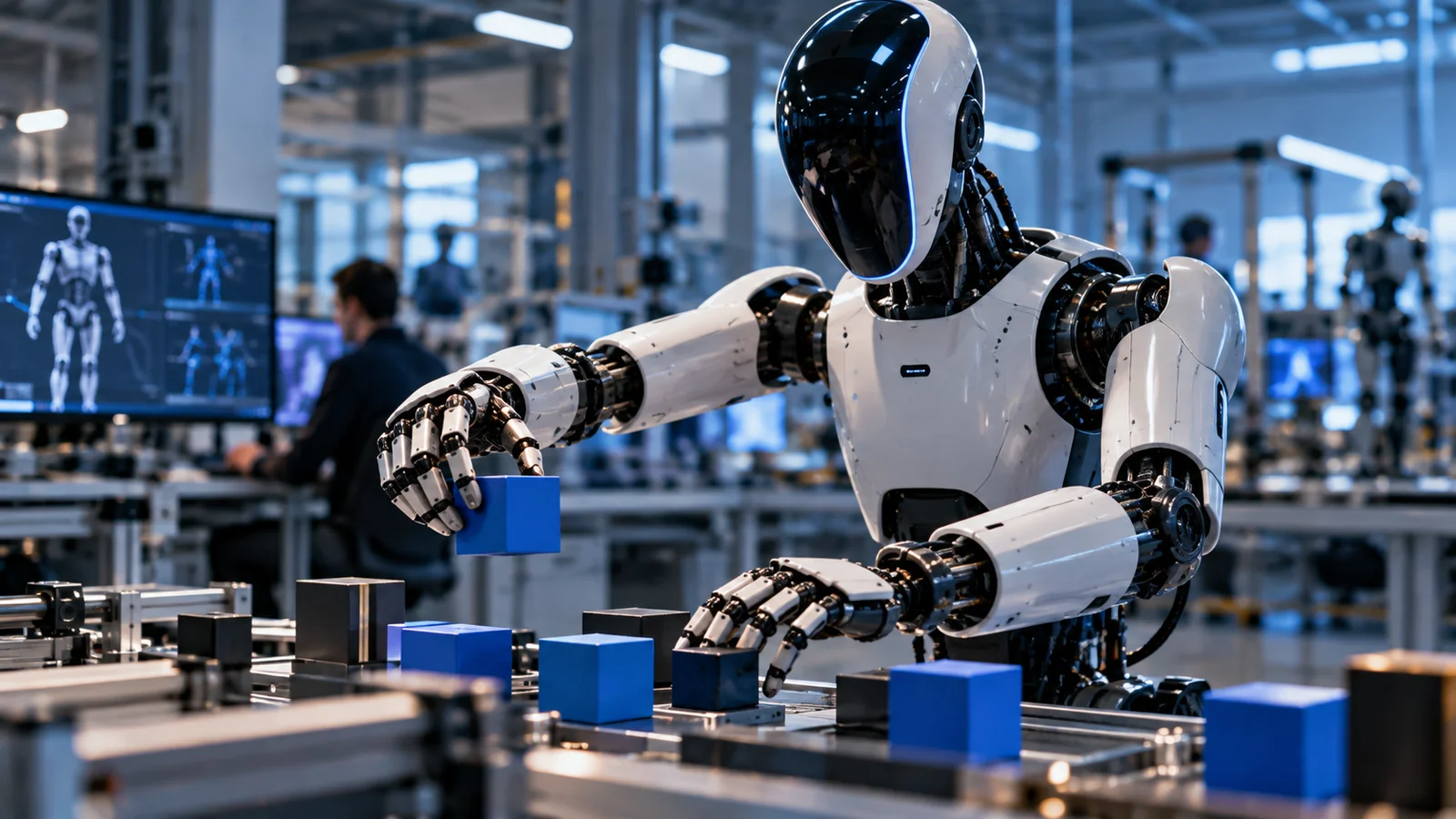
Humanoid robots need enormous amounts of experience before they can work reliably in the real world. DexForce wants to move much more of that training into simulation.